
Here’s a tiny shimmer of hope in a very dark time during the Israel-Hamas War. At this group home for young people with special needs, a Muslim young woman and a Jewish young man share a special friendship. From my article in Times of Israel, which you can read here. By the way, Times of Israel, published in Israel, has up-to-date news you won’t see in most other media sites.
When the Israel-Hamas War broke out on October 7, Aya Jaber was afraid. As a Muslim Arab living in a group home in the northern Israeli city of Nahariya with her Jewish friend, Elad Kornhauser she wondered if she’d be seen differently or suddenly mistrusted.
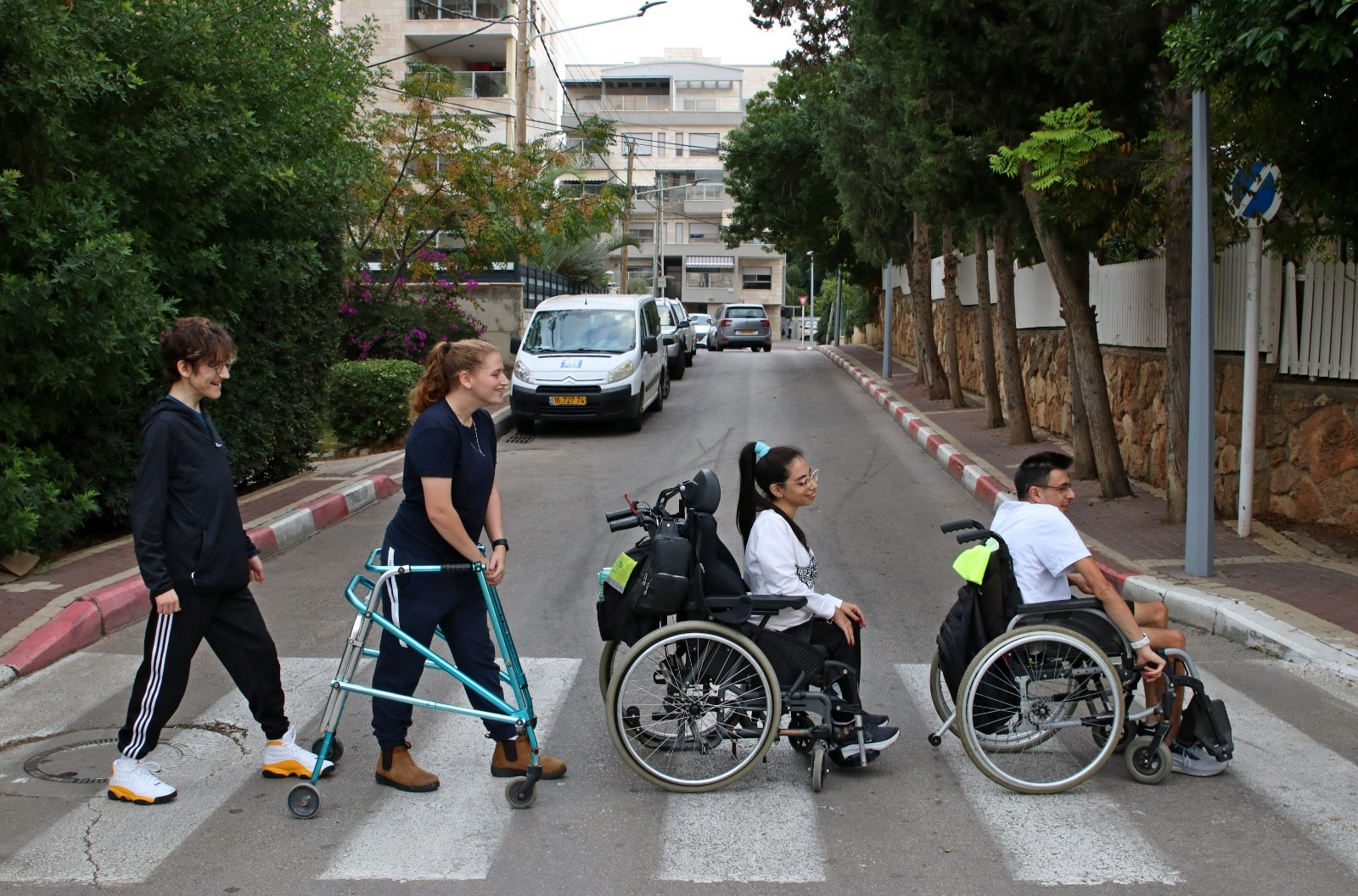
After all, Jaber knew that workers from Gaza had taken photographs inside Israel and sent them to Hamas before the October 7 massacre, providing information that helped the thousands of terrorists who invaded Israel and brutally killed over 1,200 people, mostly civilians.
“I understood the fear,” 22-year-old Jaber said on a recent afternoon in their apartment, which is run by Kivunim, an organization that helps young adults with disabilities. “The Hamas attack made Jews look at Arabs differently.”
Kornhauser, 24, listened as Jaber spoke in the bright, cozy living room that they share with two other roommates — one Muslim, one Jewish.
“I am here with you, Aya, as always,” Kornhauser told her. “We’ve lived together for more than a year. Two months can’t ruin it.”
Kornhauser and Jaber share a deep connection because they understand each other’s challenges and limitations. Kornhauser has Familial Dysautonomia, a rare genetic mutation also known as Riley-Day Syndrome. This causes malfunctions in the nervous system, including nerves that regulate involuntary functions, such as body temperature, blood pressure, breathing and salivating. The genetic mutation occurs in people with Ashkenazi Jewish or Eastern European Jewish heritage.
“It’s an antisemitic disease,” Kornhauser joked.
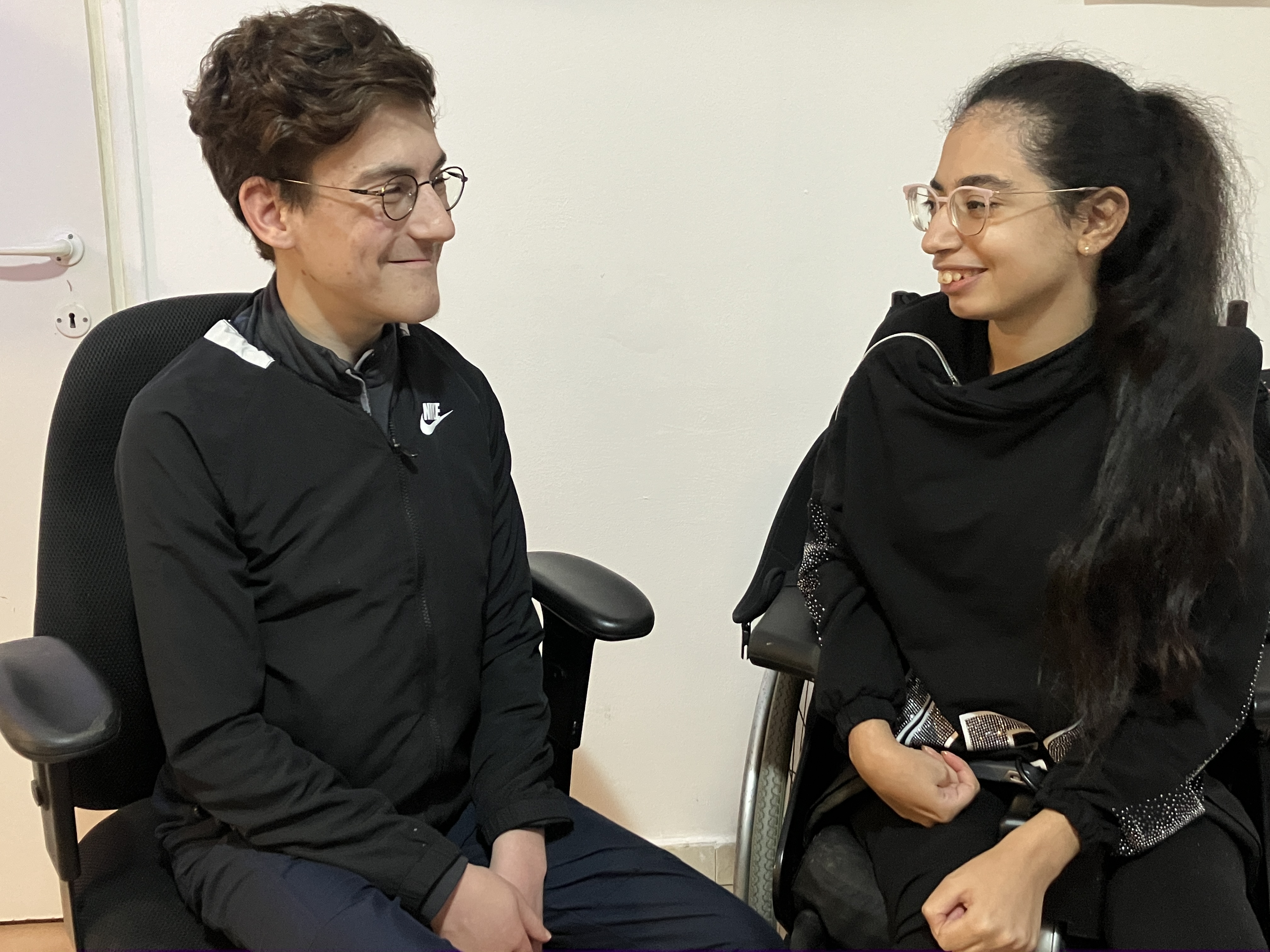
Elad Kornhauser, left, and Aya Jaber, flatmates and friends at Kivunim. (Credit: Diana Bletter)
Jaber has Cerebral Palsy which, she explained, is not a disease, but rather a group of disorders that cause neurological and musculoskeletal problems that affect posture, sensory perceptions, movement, and other functions. Able to move about in her wheelchair, Jaber serves in the Israeli National Service, volunteering in a senior citizens’ center in Nahariya. The program has been temporarily suspended, however, because there is not enough space in the protected rooms for all the residents and employees.
Hamas and Hezbollah ruined my plan,” Jaber said.
Instead, she participates in a vocational training center in Kibbutz Lochamei HaGettaot which is run in cooperation with Kochav Hatzafon, a non-profit organization for young people with disabilities. The participants learn employment skills, engage in social activities, and celebrate different religious holidays.
Jaber, from Haifa, is vivacious and talkative, with a quick sense of humor that equals the wit of Kornhauser, who’s from Ramat Gan. He calls her by her last name, Jaber, and she calls him Hauser. They like the same music, including the Beatles, Abba and Barbra Streisand. They enjoy teasing one another — as well as offering support. When they spoke about their experiences swimming, Kornhauser said he didn’t know how. Jaber responded, “I don’t know how to swim either. So?”
Then Jaber added that the few times she’s been in a pool, she didn’t like it when her family took photos of her in the water. “I look ugly,” she said.
“You don’t look ugly!” Kornhauser gently scolded her.
Jaber and Kornhauser share the apartment with two other roommates, Maya Ronen and Maysoon Samaka. The four young people, all graduates of high schools for children with special needs, help with household chores such as cleaning, cooking (Jaber said they made gnocchi the previous night), and grocery shopping. They also receive care and assistance from a live-in staff.
Over the last 20 years, Kivunim has established 45 apartments in Nahariya and Haifa which now house approximately 120 participants. Of the organization’s 210 alumni, 76 percent are employed, 34% are married, and 82% are living independently. The organization helps individuals with physical disabilities, vision and hearing impairments, chronic illness and associated disorders, as well as high-functioning young adults with autism.
Because of the war, some of the participants have been evacuated to other apartments, and many activities, such as educational day trips, have been curtailed. A social worker, counselors and various staff members are available so that the young participants can share their wartime feelings and experiences.
Alon Cohen, 21, a Kivunim counselor, said he guides Jaber, Kornhauser and the others as they learn important life skills, such as how to navigate public transportation on their own, including using an app. The goal is to help them learn to live independently.
“If they want to learn to cook a certain dish,” Cohen said, “I help them with the recipe.”
The apartment is spacious and sunny, filled with artwork, books and board games. On a recent afternoon, while Kornhauser went to take a walk, Jaber participated in a dance session with other young women.

Jaber hopes to return to her original mission of performing her national service at the elder care facility in Nahariya.
“It depends upon Hezbollah and Hamas,” she said. She added that the October 7 massacre wasn’t only an attack on Jews.
“The terrorists killed a Muslim woman in a hijab,” she said. “It didn’t matter who it was. It was that they live here in Israel and it’s seen as a betrayal.”
Kornhauser is currently taking a course at the Open University on popular music in Israel. He isn’t sure what his future goals are, but Jaber said she wants to go into acting or communication.
“They’re both very smart and very capable of doing everything they want,” Cohen said. “I help them find the ways to get there.”


 DIANA BLETTER
Thank you for sharing positive stories. Let us love one another.
Amen, Tom. Thank you so much for adding your positive prayers to this world.
This article is heartwarming and hopeful, and I pray that some equitable resolution to make peace may happen soon so that these young people can resume their lives.
Thank you for your prayers for peace.