Rise: A Talk With Writer Yosef Gotlieb

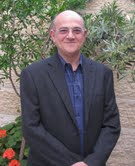
Rise Author Yosef Gotlieb; photo by Amichai Gotlieb

I’m happy to welcome Yosef Gotlieb, a writer, geographer and lecturer in Israel. He writes about everything from astronomy to the environment and politics in The New York Times, The Los Angeles Times and other publications. His book, Rise, has just been published. Rise is a moving story set in Israel, a political who-done-it that raises important questions about extremism around the world and Israeli society in particular. Rise is available at amazon.com here as well as Barnes & Noble  and other major vendors, and as an eBook at Kindle   and Smashwords.

Diana: My blog talks about making this the best chapter of our lives. What are the things you do on a daily basis to make this part of your life your best chapter?

Yosef Gotlieb: In 1987, I had an accident which left me with long-term disability and severe pain. Additionally, after my marriage and the completion of my doctorate, I had to  contend with a chronic illness that  increasingly curtailed my functioning. In 2005 I was diagnosed with End-Stage Liver Disease and pulmonary hypertension secondary to it. I had very little chance of surviving a liver transplant in late 2006. Contrary to expectations, I made it.

I was, of course, very grateful to be alive.  But I returned to find both my professional and literary careers in shambles and, by then in my early fifties (I’m now 57), any hope I might have had about making my mark on the world and improving it seemed faint.  With the help of my wife and children, great doctors and my own determination I gradually rehabilitated myself physically, and with this, spiritually. I learned a great deal from my illness – about what is important in life and how it should be lived – and I employ these lessons in my daily life.

I look for every opportunity to enjoy nature and beauty. I favor the spiritual over the material. I try to live simply. I practice chi koen twice daily and while I am not an orthodox Jew, I do engage in traditional spiritual practices each day. I take the time to look at the nocturnal sky and to watch the sea when I can. I try to control the stresses in my life. I regularly engage in power walks and am physically active. I spend a considerable amount of time volunteering, primarily relating to health-related issues but also social and environmental ones. I try to visit new places and people as often as I can. I read as much as my obligations permit and listen to music at every opportunity.

All of this has made me much more productive and satisfied than I ever have been and I look forward to many years of living, working, loving, writing and teaching and doing my part to help others and improve the world.

Diana: I love the imperative title of your book, Rise. It is almost a command. Could you tell us how you thought of it?

Yosef Gotlieb: I began writing the work that would become Rise in 1984 shortly after making my home in Israel and realizing that my idealized expectations of the society were marred by increasing extremism. I come from an activist tradition, the belief in the Jewish credo of Tikkun Olam, repairing the world. Writing the book and presenting it to readers in the hope of inspiring change was a fundamental motivation of mine.

In earlier drafts the title of the book was The Rains, referring to a cycle of prolonged drought that accompanies the unfolding plot and concludes with torrential rains at the end of the work. I had intended this as a metaphor for the long period of societal inaction, languishment, and uncertainty that characterizes Israel today.

But in reworking the book I realized that it was an affirmation of faith in Israeli society, particularly its roots in the prophetic tradition of social justice and its proactive character. “Rise” is a call for awakening and action…It is a summons to mobilize for a better future.

Diana: I am curious about your life. You were born in Costa Rica, raised in America and now live in Israel. How many languages do you speak? How has the variety of spoken and written languages influenced your writing?

Yosef Gotlieb: My parents were born in Poland and brought to Costa Rica as children by their parents in the 1930s, when it was clear that there was not future for Jews in Europe. They were raised in Yiddish-speaking families and in a community where Spanish was increasingly spoken but Yiddish remained a vernacular. I was born in that community but my nuclear family moved to Chicago when I was an infant. At home, my parents were linguistically rooted in Spanish and Yiddish and I, and later my brother who was born in the US, brought English into our family. I learned English primarily by learning to read and consuming written matter voraciously from an early age.

Growing up there was always a sense of struggle in verbal communication and I increasingly relied on written communication for self-expression. Eventually, though, my verbal skills improved and I have been a teacher and lecturer for many years.  I began writing at a very young age and it is through that medium that I find greatest satisfaction in self-expression.

I had a speech community but no mother tongue. I do have what I call a father tongue, Hebrew, which is central to my historical identity. As one translator of my work recently noted, though I was educated in the US the English language of my writing has an Israeli lilt to it. Also, since my personal life has been influenced by Yiddish, Spanish, American and Israeli cultures, this is reflected in my writing, in which I often use non-English colloquialisms.  Today, I speak mainly Hebrew in my family and social life, I teach and write in English, and I often use Spanish. Sometimes, I find myself using all three languages in one conversation.

Diana: I admire the way you infuse your novel, Rise, with political vision. What are some do’s and don’ts for fiction writers to avoid turning their work into polemics? And do you have one or two tips you can share about writing well?

Yosef Gotlieb: Yaakov Bok, the imprisoned Jew in Bernard Malamud’s great work, The Fixer, says that there is no such thing as a non-political man, especially if he’s a Jew. Whether things will be different in Utopia, I can’t say, but negotiating the forces of power, domination and exploitation, is a mainstay of contemporary life. I believe that if you are not part of the solution, you are part of the problem.

That said, politics in literary endeavors is a tricky thing; they don’t mix easily. Good fiction is about people, their challenges and triumphs, big and small. If one looks at the work of great authors like John Steinbeck, or a book like To Kill A Mockingbird these achievements with social and political implications have far greater impact by their subtlety than any work that hammers or whines, no matter how just the cause.

I am constantly struggling to improve my craft as a writer and I expect to continue doing so as long as I write, that is, hopefully until my last day on earth. Writing is chiefly about rewriting, striving for the greatest fidelity between what appears on paper and is presented to the reader and the message that the writer finds himself or herself  commanded to express. This involves a process of constant self-discovery and self-improvement. All of this involves unceasing discipline and commitment, often with little reward.

Diana: Finally, I am inspired by your range of interests and activities. When can you possibly find time to write?

Yosef Gotlieb: Finding time to write is a necessity for me. I block off a dedicated period during which whatever I am working on becomes the focus of my productive energies. For example, I planned to write the first full draft of my new novel, Dance of the Uroboros last July 1st and to conclude it by the end of September. I kept to that schedule, including time to review the draft and “study” what I had come up with, that is, to see where the characters, plot and writing needed to be improved and the work rendered more cohesive. I then decided that I would let the draft percolate through mid-December, allowing me to consider several issues that I have to resolve in the story while at the same time enabling me to put my academic commitments on track for the new year. I am already itching to get back to work on the manuscript, but I think that this time away from it will prove important to its development.

Diana: I love the title of your next novel, Dance of the Uroboros. What is it about?

Yosef Gotlieb: Dance of the Uroboros is a fictionalized account of my experience with two life-threatening illnesses that challenged both my body and my spirit over two years before I underwent a liver transplant. It is not a memoir nor is it an autobiography; the characters are fictional, though the protagonist’s life and challenges bears certain parallels to my own. It is a story about self-reckoning and trying to come to peace with the past in order to continue into the future.

Thank you, Yosef!

For more insights into Rise and Yosef Gotlieb’s other writing, check out his website, http://www.ysgotlieb.net/.

The Rise book trailer can be accessed at: (http://www.youtube.com/watch?v=wm_yYFGUaiM&feature=youtu.be)

Posted in Writers, Writing, Your Best Chapter | Tagged , , , , , , , , , , , | Leave a comment

Tool For Tuesday: Plan A, Plan B and Plan T

The lights are on in Glen Cove, yay! A nor’easter is expected tomorrow, boo! After Hurricane Sandy, another storm is the last thing needed.

But the Tool for Tuesday is this: have a plan A, a plan B (for back-up) and then Plan T for Taking Care of Yourself.

My friend, Joelle, has a boyfriend who’s unreliable. So whenever she makes a plan with him, she always has two extra back-up plans.  Plan B and Plan T. Nobody except those in your trusted inner circle needs to know what Plan T is…Choose your confidantes wisely. That plan T might save your life. It will certainly free you from resentment because you’re not depending on someone else to take care of you.

Tool for Tuesday: Make sure you’ve got a Plan T.


Posted in Tool For Tuesday | Tagged , , , | 2 Comments

Who’s Gonna Listen to You Complain: Hurricane, Insane, Needless Pain, More Rain…?

Reporting from Glen Cove, Long Island, where Hurricane Sandy is still devastating the population, my sister Cynthia said that on every corner there is a traffic accident (no traffic lights), four-hour wait for gas to fill her car, no credit cards but where can you get cash? No food in the refrigerator, no refrigerator, a grill but nothing to cook on it, no electricity for days in sight, no heat, no showers, no school, no nothing. She had to go to the police station – which she reported was complete mayhem—to call an ambulance for my mother who had run out of oxygen and was shivering in the cold, cold house.

All we can do is get through this next minute. I was about to tell her to call a friend for some comic relief until I remembered that she doesn’t have a phone line and her cell-phone has no more juice. So I’m putting it out there: send up your prayers for the good people who are in the middle of Hurricane Sandy. Hold them in the light.

Sometimes all we can do is accept what we can’t change…and just get by.

Posted in Acceptance, Self-Talk | Tagged , , , , , , , | 1 Comment

Tool For Tuesday: Pray Up

If you feel like you’ve reached the end of the rope, tie a knot and hang on. Hurricane Sandy is on a path of destruction.

To all my friends in harm’s way, I am holding you in the light. Nothing to do but pray up. Pray up.

Tool for Tuesday: Pray up.

Posted in Acceptance, Being a Hero In Your Life, Tool For Tuesday | Tagged , , , , , , | 3 Comments

Everybody Needs An Ideal Reader

Marilyn Warner

The winner of my Ideal Reader Award is Marylin Warner. What does that mean? If you’re a writer, you write with that one person in mind who you are trying to communicate with. As Pico Iyer said, “Writing is, in the end, that oddest of anomalies: an intimate letter to a stranger.”I found Marylin Warner — or, to be more accurate, she found me via this blog.

We all pay homage to writers, but I want to pay homage to readers. Writers need readers–smart, perceptive, voracious, curious, inquisitive, patient readers. I tip my hat.

Diana: So, Marylin, tell us about yourself.

Marylin: I grew up in Fort Scott, Kansas, in the southeast corner of the state. The terrain is a swath of the Ozarks, which is amazingly beautiful in the fall and spring. Fort Scott is just a few miles from the Missouri border, a true pre-Civil War town that has restored the entire original fort. After my father died, my brother and I sold the family home and moved our mother into a nice assisted care facility (hers is full care), and this is where I drive to visit her each month.

Diana: Yes, your powerful blog deals with visiting your mother and things you want to tell her. Readers can find it here. Tell us about your reading history, please.

Marylin: I’ve always loved reading. When I was eight I begged my mother to get us a World Book Encyclopedia set, and to show how much I valued the purchase, one summer I chose at random a topic from one of the volumes and either wrote or delivered orally a report on the topic. I did this EVERY day that summer. For myself, my favorite mystery series was TRIXIE BELDEN. With my own money I bought the entire series because the local library didn’t carry it (they thought the Nancy Drew books were enough).

In college I was an English/speech/education major who was embarrassed to learn I’d never heard of or read anything by John Steinbeck, possibly because the school had chosen to follow the ban against him. During my freshman year I was taking a full class load in college, but I also privately read all of Steinbeck’s books, which formed the base of my appreciation for American writers. Because of the demands of college and graduate school, my reading base is strong, though I like reading best when I choose the books instead of having them assigned.

Lately I’ve been drawn to books by Dublin writer Tana French (especially FAITHFUL PLACE) and London writer Erin Kelly (especially THE POISON TREE). The nonfiction writers I return to again and again are Anne LaMott and Kate Braestrup (especially HERE IF YOU NEED ME), and many of the books by fiction writers Dennis Lehane and Stewart O’Nan.

Diana: Thank you, Marylin. To toot her horn, she is the winner of the Writers Studio Literary Contest this year. (It’s open only to Colorado residents but details are here.) She has also won a Highlights Magazine writing contest which she entered on a dare.

When I write, I often feel isolated and silly, like I’m painting on a cave walls that are about to get washed out in the rain. It’s wonderful to know that there are people out there, somewhere, willing to read our work.

Who is your ideal reader? We have to live our lives and write our stories…but it’s nice to know there are people cheering us on.

I got the idea of thinking about my ideal reader from Duolit’s social media course, “How to Be an Indie Author Rockstar.” Toni and Shannon have wonderful suggestions and their website is worth a visit here.

Posted in Writers, Writing, Your Best Chapter | Tagged , , , , , , , , , , | 3 Comments

A Perfect Universe Contains Imperfections

‘Fessing our faults is freeing. Fear of not being perfect holds us back.

I once made a terrific blunder while working at The Southampton Press. I wrote that a proposed school budget was $14,000,000 when it was only $12,000,000 (or something like that, details have been blurred in my brain). I was so mad at myself. But did you ever read the Corrections Page of The New York Times? There are always corrections. We are only as perfect as our last mistake.

This blog was inspired by the honesty of Carla King who runs a Self-publishing boot camp work camp and has published books on self-publishing. She reminds authors to proof-read, proof-read, proof-read and had a typo in her newsletter and had to send an Oops! follow-up email.

Every Friday night, when my family sits down to a big meal, we go around the table and each of us shares our Happiness of the Week and also our Embarrassing Moment of the Week. This tradition is great because we can turn our mistakes into funny anecdotes.

Japanese artists always make one intended mistake in their paintings. Because:

A perfect universe contains imperfections.

Posted in Being a Hero In Your Life, How to Change Your Life, self-printing, Writers, Writing | Tagged , , , , | 8 Comments

Tool For Tuesday: Don’t Dance the Either/Or Tango

Either I love him or I hate him…either I am angry at him or I adore him…

We don’t have to do that either/or tango. We can love someone and still be angry at them–even though it’s tough.

When Wilbur the pig first met Charlotte in Charlotte’s Web, he thought, “What a gamble friendship is! Charlotte is fierce, brutal, scheming, bloodthirsty—everything I don’t like.”

But Wilbur said that underneath Charlotte’s cruel exterior, she had a kind heart, and she was to prove loyal and true to the very end. I love that book. It teaches me that we don’t have to do that either/or thing. We can love and accept people not only despite how complicated they are but because of how complicated we all are.

So what are three qualities you might not like about the person you love? She’s temperamental, sharp-tongued and fiery, let’s say. So put those qualities on the table. Then be like Wilbur and love all of them. They are sloppy and stubborn and I still love ’em. They drive me crazy and I still love ’em. Love ’em at their worst just like we want them to love us.

Tool For Tuesday: It don’t gotta be either/or. It can be and…and…and…I still love ’em.

Posted in Relationships, Tool For Tuesday | Tagged , , , , , , | Leave a comment

On Pomegranates and Procrastination

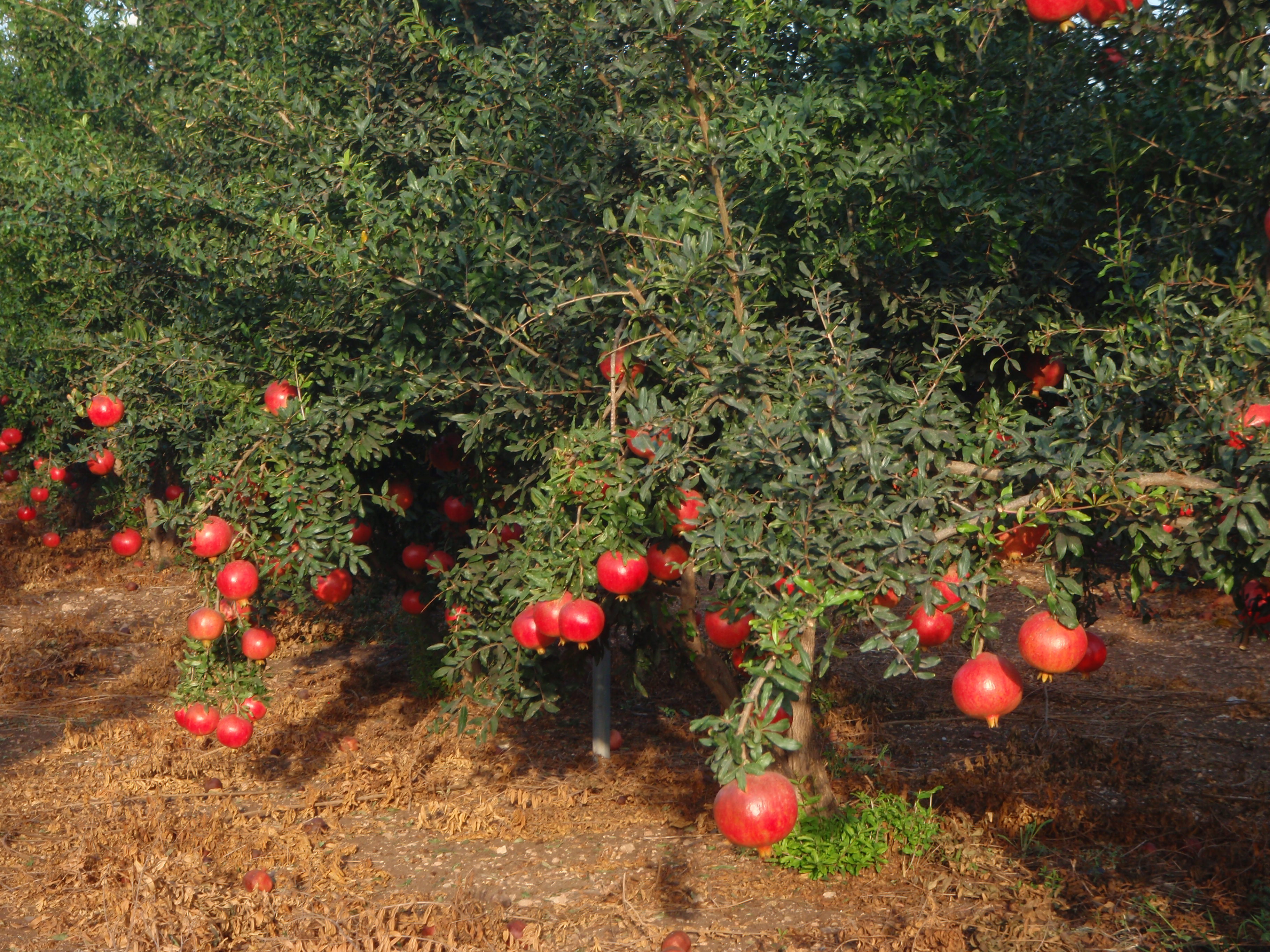
Pomegranate Orchard

Did you ever see pomegranates hanging on a tree? They are nature’s Christmas baubles! Jonny and I bicycled into a pomegranate orchard yesterday. At first I wasn’t going to bring a camera. And I wasn’t even going to go…I thought, “Oh it’s so silly, I shouldn’t be wasting
my time doing this…”

But then I thought, carpe diem. I’ll miss the moment. And I was right because…the very next day, they were harvested. They’re all gone! So what’s the lesson?

Find one thing you’ve been putting off doing…and do it. Set an egg timer if you think you’re going to get overwhelmed. Write it down. Call a friend and say what you want to do. Tell me what you avoided doing but did. Sometimes we think we’re taking care of ourselves by being lazy…but we’re not. Sometimes we think we’re indulging ourselves…but we’re not. We can enjoy life’s bounty without feeling guilty that we “should” be doing something more important.

It’s a nice planet. We’ll take it. That’s from Mars Attack – the movie. But it is a nice planet. Enjoy it. (There are other great lines from movies on the site here.)

Take care of yourself. Do something you don’t want to do. Do something you feel you shouldn’t be doing. Do something.

Posted in Acceptance, Be Less You To Be More You | Tagged , , , | 5 Comments

Easy Does It — Working From the Inside Out

I am editing my bonus handbook, Tried & True Tricks and Tips To Be A Calmer Mom. This little booklet contains gems of support and encouragement that people who buy my book, The Mom Who Took Off On Her Motorcycle, will receive FREE.

One thing that dazzled me is this idea: Easy Does It works from the inside out.

So, calm thyself, dearie, and the people around you will calm down. You get quiet, they’ll get quieter. You catch your breath and center yourself, the kids and any wild ones whirling around you will feel your wave of serenity. They’ll catch it. They’ll ride that wave with you.

How to change your life? Remember:

Easy does it starts from the inside out. Everything, everything, everything starts from the inside out.

Almost everything…I was searching for what to say at a time of grief and ran out of words. Here’s a link to my article that appeared in The New York Times on October 13, 2012:

http://www.nytimes.com/2012/10/13/opinion/when-words-do-not-suffice.html?_r=0


Posted in How to Change Your Life, Self-Talk | Tagged , , , , , , , , | 2 Comments

Tool For Tuesday: Even Things Shouldn’t Be Homeless.


Today’s Tool for Tuesday was inspired by Gretchen Rubin’s terrific twitter that if you can’t find something, it means you have to clean up.

Where did I put my keys? Where did I put my phone? Where did I put my glasses? Would someone pleeeaaase help me find my wallet?

Sound familiar? Of course it does!

How many seconds and minutes of our lives have been spent looking for lost things? My sister said that if she added up all those moments, she has probably spent the equivalent of three whole months of her life searching for missing items. (This doesn’t include the time I spent looking for my daughter, Libby, who was lost at a ski area when she was four!)

Wouldn’t it be great if everything had a tracking device like our cell-phones? You call it and it rings, answering happily. But our keys our silent. So is our wallet.

Just like people shouldn’t go homeless, neither should things. Everything needs a place. Everything in your house needs a spot it calls its own. Your belongings need to belong somewhere.

Didn’t you set up a password for your email account? Set up a place that you remember for each thing. Hang your car keys away from the front door but don’t throw them on the counter. Put your handbag on a shelf. Give your glasses a nose. (I use a branch that happens to look like the perfect proboscis.) Make a list. Save time and useless anxiety playing hide-and-seek with inanimate objects.

How to change your life today? Change your seconds. Improve each minute. Give your things a home so you don’t waste precious moments looking for your things when you could be doing something new, exciting and different.

Posted in Tool For Tuesday | Tagged , , , , | Leave a comment