Tool For Tuesday: Find The Line

My friend Lily (I’ve written about her here) reminded me that during stressful holiday times, it’s important to find the line.

Set your boundary. Where does your lawn end? Where does someone else’s territory begin? Don’t trespass into someone else’s backyard, either by word or action. As I’ve written before, don’t do unto others what they can do unto themselves. Don’t say unto others what they can say unto themselves. That means, don’t remind the adult people you love to get up, wash up, eat up, work up. Don’t cover up for someone else’s mistakes.

Lily said that her mother is always trying to get her adult sister to eat a healthy dinner. Lily reminds her, “Find the line! What you eat is your business, what she eats is hers. Take care of your own plate, leave her plate to hers.” And, as Lily says with her usual wit and finesse: “Presto, one less area of fighting!”

So how do you find the line? Very simple. Stand up. Raise your arms to shoulder level. Circle around slowly. That is your space. There’s the line. Anything else beyond the circumference of your arms is someone else’s territory. Stay out!

This suggestion is vital during December holidays when, ironically, so many people are under stress. (For an interesting look at how to de-stress your holidays, there’s an article by Arianna Huffington here.)

To make this day a page in your best chapter, find the line.

Posted in How to Change Your Life, Self-Talk, Tool For Tuesday, Transformation | Tagged , , , , , , , , , | 2 Comments

If You’ve Reached The End of The Rope, Tie a Knot and Hang On.

When the universe takes something from your grasp, it’s not punishing you, but merely opening your hands to receive something better. Concentrate on this sentence:

“The will of God will never take you where the grace of God will not protect you.”

Something good will happen to you today, something that you have been waiting to hear. Don’t allow yourself to break down. If you feel like you’ve reached the end of your rope, tie a knot and hang on.

This was written in the aftermath of Hurricane Sandy and the Sandy Hook Elementary School shooting. Sometimes we just don’t understand. I was fascinated by the words of Rabbi Shaul Praver in an article in The New York Times here who tried to comfort Veronique Pozner who lost her son, Noah, in the massacre. The rabbi asked her if she remembered her 6-year-old self. She did. “When we become adults,” he said, “our 5- and 6-year-olds didn’t die with us; they’re contained within a larger vessel.”

Nothing is lost. Everything is contained within our universe, even if we can’t see it. Sometimes that is not much consolation.

All we can do is get through the next minute. And the minute after that.


Posted in Acceptance, Being a Hero In Your Life | Tagged , , , , , , | 2 Comments

Tool For Tuesday: Pray. Even If You’re Not Sure Why.

I’m posting today the blog I wrote for The Huffington Post here, called “Why Pray?”

Because of my prayers, the recent conflict in Gaza suddenly stopped. Or so I’d like to believe.

I was standing on my head outside my house in our small beach village in Northern Israel. It happened to be the day before the ceasefire took effect. I fell over — my legs dropping — and stayed where I was, in a yoga position called “Child’s Pose.” The position was exactly like the position of Muslim prayer. And so I stayed there. And I prayed.

Perhaps it was sacrilegious, a Jew with her forehead touching the soil of the Holy Land, adopting a Muslim prayer stance. Yet, perhaps my forging two belief systems, merging two distinct religions into one harmonious, heartfelt murmurings, somehow shifted the alliance of the sun, moon and stars?

I prayed to soften the hearts of men.

And then it happened.

There was a ceasefire.

Amen, selah.

My husband, Jonny, a former Israeli commando, thought I was nuts. “What did your prayers possibly do?”

Although a proud Jew, he hates the religion. Last time he had a run in with prayer was when he was 16, and his mother was gravely ill with breast cancer.

“Pray for her and she’ll get better,” his rabbi had told him.

He prayed and prayed, as only a 16-year-old about to lose his mother has the power to do. And she died a few months later. He stopped praying.

A part of me — the rational, right-side-of-my brain part — says that prayers are like throwing coins into a dry fountain in Piazza Navona. So many coins. So many requests. So many wishes. How can one God handle them all? Every time I go to the Western Wall in Jerusalem, I stand with the women on our side of the prayer wall and get caught up in the fervency. I watch women stick handwritten notes into the crevices of the ancient stones. Do they really think they can friend God? Big shots, thinking that God will read their pokes!

But every religion around the world has prayer in common. Maybe that is what makes humans different. Dogs talk. Horses communicate. But do they really pray? And if we’re made of the same elements as the stars — all of us composed of energies, atoms, molecules, carbon and oxygen and liquid — can’t we affect what goes on beyond our kin?

Maybe it’s not so farfetched. Maybe the motive of God was to create us to feel like we have some kind of pwer to tip the scales of destiny. Who knows?

I’d like to believe that prayers are like pixie dust. But they won’t get me to win the PowerBall; they won’t prevent me from getting sick; they won’t always save my children, my neighbors, my friends. So what’s the point? Why pray?

Because prayers connect us to the unseen, the unknown, the something that might be out there. Prayer provides us with some kind of relief, if not a form of grace. And what is grace? It is breathing in and out and not wanting to be anywhere except in the breath.

I don’t know why I pray. All I know is that I feel better afterwards. I pray in thanks for the little things: the easy peel of the bright orange clementine, the warmth of my socks, the thread count of my brain — still functioning. Even in the midst of war, we have to find things to be thankful about. That it isn’t worse, even that.

But then I remember reality and I have a problem with prayer. During the 2006 Israel-Hezbollah War, for example, I prayed for my son who was serving in an Israeli paratroopers unit that had just gone into Lebanon. I prayed hard. My son was saved. But his friend, Michael Levin of Langhorne, Pa. — fighting alongside him — was killed. Did my prayers shelter my son — and somehow cancel out another mother’s prayers?

Still, I continue to pray. I pray for all the people in the Gaza Strip, the West Bank, the people in Israel, the leaders of all sides. I pray that we’ll be given the answers for how to solve this seemingly unsolvable conflict. I prayed that the Gaza Strip becomes the Hong Kong of the Middle East — just as loud, lit and manic — selling Armani jackets instead of missiles. I pray that my words carry same weight as any Crusader, mujahedeen or rabbi.

I pray even if I don’t know why I’m praying or who I’m praying to. I don’t have a choice. I have no other tools. Nothing else comes close. My heart is full. My heart is empty. I pray.

…One blogger commented that “people pray just to make themselves feel better.” What do you all think? Is prayer a tool for Tuesday? Or a tool for Foolsday? Hit Like. If not, tell me what you think!

Posted in Acceptance, Tool For Tuesday, Transformation | Tagged , , , , , , , , | 6 Comments

Interview With Cynthia Morris: Tapping Your Juju

I’m happy to welcome Cynthia Morris, author of the novel, Chasing Sylvia Beach, and owner of Original Impulse. First: her novel, which gives readers a passport into Paris before World War II and insights into the life of Sylvia Beach, founder of the Shakespeare and Company bookstore. Her other passion is to guide women toward tapping their juju, their unique energy. Her website here (but don’t go away yet!) offers fabulous tips on artist’s travel tools and 15 places to write.

Diana: I love the name of your website, Original Impulse. It reminds me a bit of Natalie Goldberg‘s fast writing technique. Is that what you have in mind?

Cynthia: That makes me smile, but no, I didn’t have that in mind when I named my company. I don’t remember exactly why I seized upon that name. I do remember trying to puzzle it out and going for a walk. On the walk, it came to me. I liked it immediately. Luckily it still holds up, a name that calls people to be true to their deepest selves.

Diana: I am curious about your concept of “creative autonomy.” In a recent post, I wrote about emotional autonomy – becoming our own independent nation. Could you share some more about this?

Cynthia: The people I coach want to be in charge of their lives. In charge of their creativity. It’s a deep desire to create what we want on our own terms. Yet doing it isn’t so easy. It turns out we need help. We need constraints. We need someone nodding yes, encouraging us to go forward. We need someone saying, wait, think about this from all angles. We need help to find our own best creative practices so we actually can be creativity autonomous – living and making art on our own terms as much as possible.

Diana: My blog talks about making this the best chapter of our lives. What are the things you do on a daily basis to make this your best chapter?

Cynthia: I practice yoga, taking classes at my favorite yoga studio. That always helps me feel I’m living my best life.

The basics help me feel I’m living my best chapter – really good, fresh food, the best coffee I can buy, making my cappuccino every morning. These little things help emphasis my gratitude and pleasure in the simple things In life.

Other than that, I am always challenging myself. I’m always seeking my best self in thought, feeling and action. I don’t know that this is my best chapter, but I can always seek my best expression.

Diana: I like the idea that runs through CHASING SYLVIA BEACH that Lily Heller turned her disappointment into a strength. Why does this theme resonant for so many people? How can we learn from it in our lives?

Cynthia: I don’t know about others, but I am always battling disappointment. I think this is the bane of having an over-active imagination. We tend to live life in another realm, in our minds, in the vast realm of our imagination. There, everything is scripted according to our internal vision. But things don’t usually turn out the way we imagine, do they? Usually they’re better than we think, but often we’re disappointed.

People don’t get back to us as soon as we want. They say no. The minute we enter the world, try to communicate or collaborate, we’re likely to be disappointed when people don’t act the way we want.

The better strategy is to have no expectations. But that’s not so easy. I’m always trying to figure out how to have intentions and goals but not expectations. It’s a tricky balance.

As a coach, I try to turn disappointment into information I can use. Where was my thinking out of alignment? Where could I have stepped back for a larger view? How did I contribute to this disappointment? What can I take from this going forward?

These are all questions we can ask when we’re disappointed. Usually our inner critic will answer these questions in ways that belittle us and dissuade us from trying again. But if you can be objective and look for points for improvement, disappointment won’t sting so much.

Diana: Finally, I am inspired by the phrase you use in CHASING SYLVIA BEACH, “Trouver sa voie.” You found your voice! Good for you! Can you give readers 2 tips on finding their voice, their path, their power?

Cynthia: I think it starts with the content. What are you drawn to write about? What is the subject of the art you create?

Look for the subject matter that excites you, and that is perhaps a bit daunting or risky. The thing that scares you a little bit is often the thing that helps you tap into what’s really important to you.

Then, give yourself permission to write or create that thing without having to put it into the world. Don’t seek approval so much. Give yourself time to find satisfaction from your own voice and your own creativity. The more you seek approval from others, the further your voice will be from you.

Thank you so much, Cynthia, for your inspiring words!

Thank you, Diana, for your inspiration and for inviting me to share my story with your readers.

English: The author James Joyce photographed w...

English: The author James Joyce photographed with Sylvia Beach and Adrienne Monnier at Shakespeare & Co. in Paris in 1920. Image courtesy of the Beinecke Rare Book & Manuscript Library, Yale University.http://beinecke.library.yale.edu/dl_crosscollex/brbldl/oneITEM.asp?pid=2004465&iid=1021830&srchtype= (Photo credit: Wikipedia)

Posted in How to Change Your Life, Transformation, Writers, Writing, Your Best Chapter | Tagged , , , , , , , , , , | 5 Comments

Tool For Tuesday. Think Football. Block That Resentment.

OK, we all have someone we love to resent. Our Billboard Top 10 List. Our secret someone. Sometimes it’s almost like a love affair, all that time we waste being angry, hurt, seething at that special someone.

We justify it, of course. Claim that we’re right, they’re wrong, and someimtes we go to great lengths rehashing the story with friends, getting them to see our side.

Here’s the secret: nobody wants to hear it. Please don’t share, again, how tough it is, how much you were hurt.

Be like a football player. You’ve got to block that resentment. You’ve got to let it go and move on. Pretend you have the biggest, baddest brutes watching you, standing guard on the corners of your mind. They will stop your resentment from seeping in your brain. Each time you start to replay the scene, the dialogue and how you’re plotting revenge, get those guys to block it. Don’t let the resentment in. It only hurts you. It’s like drinking poison and hoping the other person dies.

As tough as it is, pray for the person you resent. Pray for their health, happiness and prosperity. Pray that they will receive everything you wish for yourself. I don’t know why this works but it helps you grow calmer and more peaceful.

If you can’t do that yet, then at least come up with a nickname for the person so that you laugh when you mention him. My friend Lily who works with a woman named Liz (her resentment of choice) calls her Fizz. McKelly becomes McBelly. You get the idea.

There’s no resentment that’s worth keeping. Check out my post here about Sam’s elderly mother-in-law who still had resentments and grudges from 50 years ago. Do you want to keep spitting into your own spaghetti sauce?

Posted in Resentment, Tool For Tuesday | Tagged , , , , | 2 Comments

The Lesson Of the Ash Tree


My friend Sam was telling me about the morning he sat looking at an ash tree. He saw the passing of time, the strength, the resilience.

“From an ash tray?” I asked. I was thinking of looking at my mother’s ash tray: the passing of time, the strength, the resilience.

We both laughed.

I’ve been looking at the cigarette butts and the ashes in her ashtray for half a century. I have always braced myself, sitting there, but over the years, I’ve learned many spiritual lessons. Just as many (perhaps more) as I might have received from sitting and looking at an ash tree.

You can look at anything: the ugly and the beautiful, the sinner and the saint, the joy and the sorrow, and learn something.

Our job is to look for the spiritual messages. That’s the miracle. That’s how we grow.

Posted in miracles, Sam's stories | Tagged , , | 5 Comments

Tool For Tuesday: Let The Show Begin

“The show doesn’t go on because it’s ready; it goes on because it’s 11:30,” said Lorne Michaels, creator of “Saturday Night Live.”

I was thinking about that as I struggled to make the final touches on The Mom Who Took Off On Her Motorcycle. I want it to be as good as it can get but I have reached the point where I feel like I’m just treading in old water.

I begged my friend to give me a deadline to finish the dang thing. “Are you editing it out of existence?” asked my friend Jane. “I took a journalism course with Karl Grossman and he said the magic words that got me to stop doing that. He told us that we were already good writers and that we should go with our first draft. Now there’s a revolutionary thought! No other professor ever said such a thing. But, Grossman is right.”

Sometimes we don’t know when to stop. Sometimes we can rehearse so much that the curtain never rises on the stage. We have to let go of perfectionism and launch.

Are you over-doing something rather than letting it go? Is perfectionism or fear standing in your way? This isn’t only about writing or editing, it’s about living our best chapter. We’re not always ready to do the things we’re supposed to do. But we have to do them.

The show doesn’t go on because it’s ready. It goes on because it’s 11:30.

Posted in Tool For Tuesday, Writing, Your Best Chapter | Tagged , , , , , | 7 Comments

Are Prayers Like Pixie Dust?

Sorry, but no matter how hard you pray, you might not win the lottery, avoid sickness, escape disaster, death, loss, or pain.

Prayers are not bargains. There’s no “If I do this, give me that.” We won’t be able to pull a rabbit out of our hats. But prayers are still magic. Prayers can still give us the ability to cope with any situation we find ourselves in.

Pray in whatever language you want. First, say thank you. A sincere thank you for everything you still have. Say thank you for your eyelashes, your funny-looking toenails, the shell-like curves of your ears. Be grateful for the toast, the melting butter, the cup of hot coffee. Try to say thank you for every little thing in your life that you take for granted. Knowing and appreciating what we already have is prayer.

Then pray for the strength you need for any task facing you. If you’re about to have a difficult conversation, don’t rehearse the lines in your head. Pray only for the right words to be given to you at the right time. Pray to keep silent long enough to hear the words—they will come for you.

Pray for all those you resent. Really. Pray that they be granted everything you pray for yourself. Pray for their health, happiness and prosperity. Now, that’s magic because the resentments will lift. You will be amazed.

If you’re praying for the patience to wait for something you really want, remember that waiting time is not wasting time. You’re still doing what you’re supposed to be doing.

“I’ve begun to realize that you can listen to silence and learn from it,” said Danny in Chaim Potok‘s The Chosen.

Prayers might not change your situation but they do work like magic. They are like pixie dust. Sprinkle them around you and watch what happens.

Posted in Transformation, Your Best Chapter | Tagged , , , , , | 4 Comments

Tool For Tuesday: If You Feel Like S**t, You’re Being Fertilized To Grow

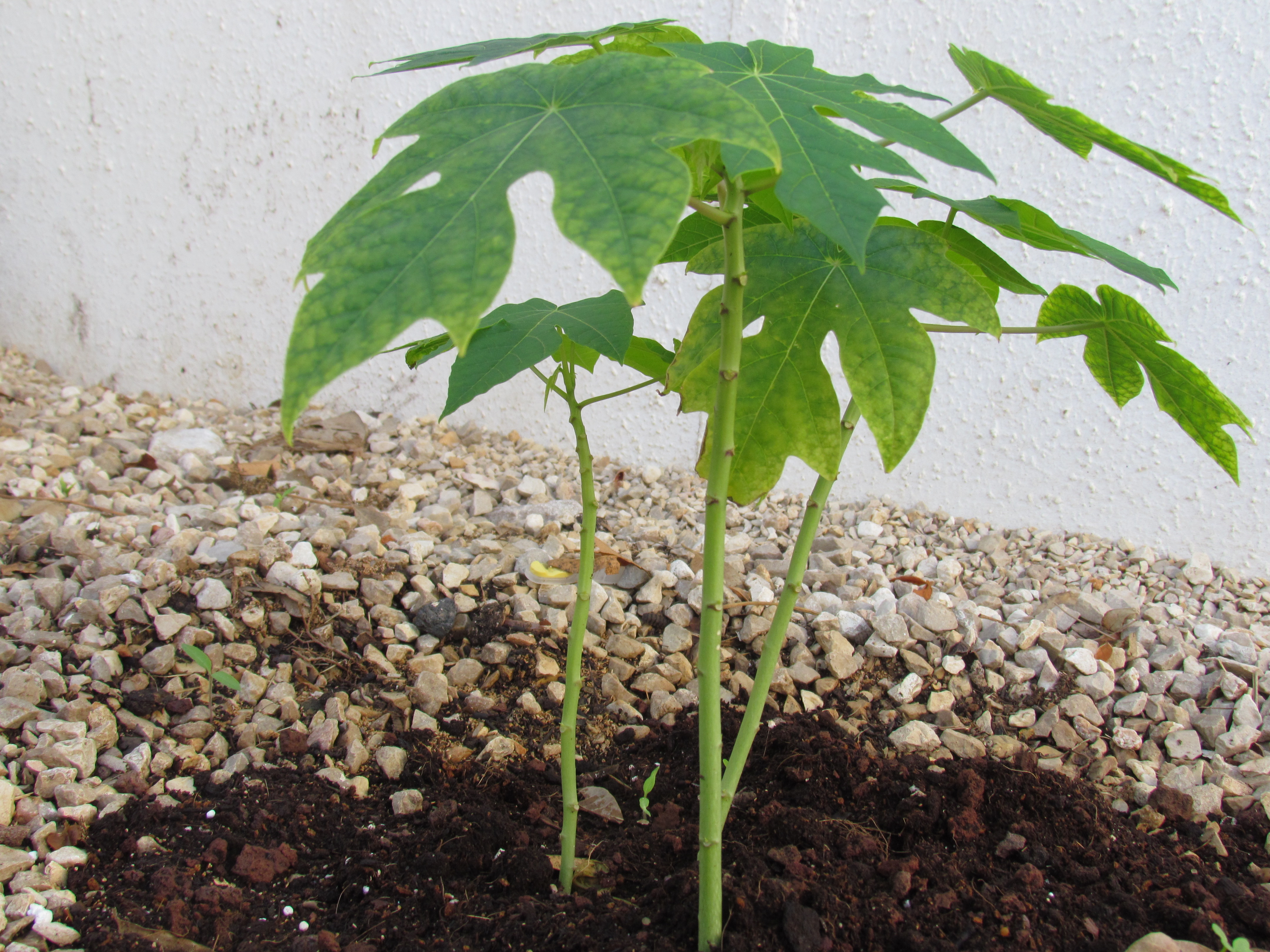
Papaya trees!

For my older daughter Amalia’s 19th birthday, my 18-year-old younger daughter Libby bought her a compost shed. What better celebration for the earth than a girl getting an ugly black plastic box to recycle garbage rather a coupon for the modern equivalent to Chinese foot-binding: epoxy-glued fake nails. The compost shed was a great success. Suddenly, we had less garbage to throw out and all this rich compost for our garden. What we didn’t know was that slugs had tunneled out of the compost shed and into my husband Jonny’s garage where he keeps his Harley Davidson. What was more important? Saving the environment or saving my marriage?

I had to get rid of the compost shed, unfortunately, but what grew out of the compost? Three papaya trees! (Drum roll…here they are in the picture.) I’d eaten a few papayas and threw them out in the compost and voila.

What’s the lesson? Out of garbage grows beauty. So, if you feel like s**t, you are being fertilized to grow. There’s no short cut here. We have to feel like crap to change. We have to disintegrate, dive into the darkness, struggle, scuffle, and tussle with our demons before we can change into something else. We have to hit the s**t to get ourselves even willing to do something different.

If we’re struggling with a decision, a person, a place, a situation, then we can remind ourselves that it’s for a positive purpose. We might not feel it now but everything will be OK. Is OK, even when we don’t really feel it. We have to have patience to sit in the sludge.

Tool for Tuesday: If you feel like s**t, you are being fertilized to grow.

Posted in Acceptance, Self-care, Self-Talk, Thought For The Day, Tool For Tuesday, Uncategorized | Tagged , , , , | 5 Comments

Rise: A Talk With Writer Yosef Gotlieb

Rise Author Yosef Gotlieb; photo by Amichai Gotlieb

I’m happy to welcome Yosef Gotlieb, a writer, geographer and lecturer in Israel. He writes about everything from astronomy to the environment and politics in The New York Times, The Los Angeles Times and other publications. His book, Rise, has just been published. Rise is a moving story set in Israel, a political who-done-it that raises important questions about extremism around the world and Israeli society in particular. Rise is available at amazon.com here as well as Barnes & Noble  and other major vendors, and as an eBook at Kindle   and Smashwords.

Diana: My blog talks about making this the best chapter of our lives. What are the things you do on a daily basis to make this part of your life your best chapter?

Yosef Gotlieb: In 1987, I had an accident which left me with long-term disability and severe pain. Additionally, after my marriage and the completion of my doctorate, I had to  contend with a chronic illness that  increasingly curtailed my functioning. In 2005 I was diagnosed with End-Stage Liver Disease and pulmonary hypertension secondary to it. I had very little chance of surviving a liver transplant in late 2006. Contrary to expectations, I made it.

I was, of course, very grateful to be alive.  But I returned to find both my professional and literary careers in shambles and, by then in my early fifties (I’m now 57), any hope I might have had about making my mark on the world and improving it seemed faint.  With the help of my wife and children, great doctors and my own determination I gradually rehabilitated myself physically, and with this, spiritually. I learned a great deal from my illness – about what is important in life and how it should be lived – and I employ these lessons in my daily life.

I look for every opportunity to enjoy nature and beauty. I favor the spiritual over the material. I try to live simply. I practice chi koen twice daily and while I am not an orthodox Jew, I do engage in traditional spiritual practices each day. I take the time to look at the nocturnal sky and to watch the sea when I can. I try to control the stresses in my life. I regularly engage in power walks and am physically active. I spend a considerable amount of time volunteering, primarily relating to health-related issues but also social and environmental ones. I try to visit new places and people as often as I can. I read as much as my obligations permit and listen to music at every opportunity.

All of this has made me much more productive and satisfied than I ever have been and I look forward to many years of living, working, loving, writing and teaching and doing my part to help others and improve the world.

Diana: I love the imperative title of your book, Rise. It is almost a command. Could you tell us how you thought of it?

Yosef Gotlieb: I began writing the work that would become Rise in 1984 shortly after making my home in Israel and realizing that my idealized expectations of the society were marred by increasing extremism. I come from an activist tradition, the belief in the Jewish credo of Tikkun Olam, repairing the world. Writing the book and presenting it to readers in the hope of inspiring change was a fundamental motivation of mine.

In earlier drafts the title of the book was The Rains, referring to a cycle of prolonged drought that accompanies the unfolding plot and concludes with torrential rains at the end of the work. I had intended this as a metaphor for the long period of societal inaction, languishment, and uncertainty that characterizes Israel today.

But in reworking the book I realized that it was an affirmation of faith in Israeli society, particularly its roots in the prophetic tradition of social justice and its proactive character. “Rise” is a call for awakening and action…It is a summons to mobilize for a better future.

Diana: I am curious about your life. You were born in Costa Rica, raised in America and now live in Israel. How many languages do you speak? How has the variety of spoken and written languages influenced your writing?

Yosef Gotlieb: My parents were born in Poland and brought to Costa Rica as children by their parents in the 1930s, when it was clear that there was not future for Jews in Europe. They were raised in Yiddish-speaking families and in a community where Spanish was increasingly spoken but Yiddish remained a vernacular. I was born in that community but my nuclear family moved to Chicago when I was an infant. At home, my parents were linguistically rooted in Spanish and Yiddish and I, and later my brother who was born in the US, brought English into our family. I learned English primarily by learning to read and consuming written matter voraciously from an early age.

Growing up there was always a sense of struggle in verbal communication and I increasingly relied on written communication for self-expression. Eventually, though, my verbal skills improved and I have been a teacher and lecturer for many years.  I began writing at a very young age and it is through that medium that I find greatest satisfaction in self-expression.

I had a speech community but no mother tongue. I do have what I call a father tongue, Hebrew, which is central to my historical identity. As one translator of my work recently noted, though I was educated in the US the English language of my writing has an Israeli lilt to it. Also, since my personal life has been influenced by Yiddish, Spanish, American and Israeli cultures, this is reflected in my writing, in which I often use non-English colloquialisms.  Today, I speak mainly Hebrew in my family and social life, I teach and write in English, and I often use Spanish. Sometimes, I find myself using all three languages in one conversation.

Diana: I admire the way you infuse your novel, Rise, with political vision. What are some do’s and don’ts for fiction writers to avoid turning their work into polemics? And do you have one or two tips you can share about writing well?

Yosef Gotlieb: Yaakov Bok, the imprisoned Jew in Bernard Malamud’s great work, The Fixer, says that there is no such thing as a non-political man, especially if he’s a Jew. Whether things will be different in Utopia, I can’t say, but negotiating the forces of power, domination and exploitation, is a mainstay of contemporary life. I believe that if you are not part of the solution, you are part of the problem.

That said, politics in literary endeavors is a tricky thing; they don’t mix easily. Good fiction is about people, their challenges and triumphs, big and small. If one looks at the work of great authors like John Steinbeck, or a book like To Kill A Mockingbird these achievements with social and political implications have far greater impact by their subtlety than any work that hammers or whines, no matter how just the cause.

I am constantly struggling to improve my craft as a writer and I expect to continue doing so as long as I write, that is, hopefully until my last day on earth. Writing is chiefly about rewriting, striving for the greatest fidelity between what appears on paper and is presented to the reader and the message that the writer finds himself or herself  commanded to express. This involves a process of constant self-discovery and self-improvement. All of this involves unceasing discipline and commitment, often with little reward.

Diana: Finally, I am inspired by your range of interests and activities. When can you possibly find time to write?

Yosef Gotlieb: Finding time to write is a necessity for me. I block off a dedicated period during which whatever I am working on becomes the focus of my productive energies. For example, I planned to write the first full draft of my new novel, Dance of the Uroboros last July 1st and to conclude it by the end of September. I kept to that schedule, including time to review the draft and “study” what I had come up with, that is, to see where the characters, plot and writing needed to be improved and the work rendered more cohesive. I then decided that I would let the draft percolate through mid-December, allowing me to consider several issues that I have to resolve in the story while at the same time enabling me to put my academic commitments on track for the new year. I am already itching to get back to work on the manuscript, but I think that this time away from it will prove important to its development.

Diana: I love the title of your next novel, Dance of the Uroboros. What is it about?

Yosef Gotlieb: Dance of the Uroboros is a fictionalized account of my experience with two life-threatening illnesses that challenged both my body and my spirit over two years before I underwent a liver transplant. It is not a memoir nor is it an autobiography; the characters are fictional, though the protagonist’s life and challenges bears certain parallels to my own. It is a story about self-reckoning and trying to come to peace with the past in order to continue into the future.

Thank you, Yosef!

For more insights into Rise and Yosef Gotlieb’s other writing, check out his website, http://www.ysgotlieb.net/.

The Rise book trailer can be accessed at: (http://www.youtube.com/watch?v=wm_yYFGUaiM&feature=youtu.be)

Posted in Writers, Writing, Your Best Chapter | Tagged , , , , , , , , , , , | Leave a comment