Welcome One & All to December’s Jewish Book Carnival. Step Right This Way.

Welcome one and all to December 2013’s Jewish Book Carnival! This is a monthly event “where bloggers who blog about Jewish books can meet, read, and comment on each others’ posts.” The posts are presented on a participant’s site on the 15th of each month. I’m honored to serve as the host this month–a first for me. Bloggers sent me their entries; if there are mistakes, they’re all mine. Anyway, here are some fabulous reads:

On her blog, Ann Koffsky gives us a mini-glimpse into the Society of Illustrators  annual “Original Art” exhibit that celebrates  the fine art of childrenANN KOFFSKY’s book illustration.

Heidi Estrin at The Book of Life Podcast posted a podcast interview with Canadian author Sharon McKay about her award-winning title for teens, Enemy Territory, in which an Israeli boy and a Palestinian boy share a hospital room, a nighttime adventure, and a reluctant friendship.

Kathy Bloomfield continues exploring the Nisim B’Chol Yom/Blessings for Daily Miracles  at her blog, forwordsbooks.com. This month she focuses on the Power of Water.

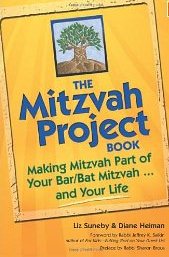
MITZVAH PROJECT

Over at InterfaithFamily.com, Ms. Bloomfield provided books about the Jewish value of Nedivut/Generosity a blog that was also picked up by JewishBoston.com   and sent out on the Combined Jewish Philanthropies’ Family Connection Newsletter.

Right here at www.thebestchapter.com I am excited to feature interviews with three spectacular Jewish women writers in separate interviews: Molly Antopol, Dara Horn, and Amy Sue Nathan who discuss writing as a way to make sense of life’s frights, Judaism, women’s fiction and an unintentional medieval facebook.

At My Machberet, Erika Dreifus collects some of the coverage of Ari Shavit’s My Promised Land: The Triumph and Tragedy of Israel.

Esther's Hanukkah Disaster
Esther’s Hanukkah Disaster

At The Whole Megillah, The Writer’s Resource for Jewish Story, Barbara Krasner interviews Esther’s Hanukkah Disaster author Jane Sutton and illustrator Andy Rowland in a Two-in-One Notebook Special.


In December, Anne Perry reviewed Mastering the Art of Soviet Cooking: A Memoir of Food and Longing, by Anya von Bremzen, and found there a poignant and playful discussion of memory and nostalgia.

Earlier, in November, Anne Perry at  reviewed two books together, The Golem and the Jinni by Helene Wecker and The Rise of Abraham Cahan by Seth Lipsky  and compared how the two authors portrayed turn-of-the-century Jewish life in the Lower East Side.

Howard Freedman writes a monthly column on new Jewish books in J Weekly, the San Francisco Bay Area’s Jewish newspaper. In December, he writes about three new fiction titles from Israel.

Sandor Schuman suggests that you check out Dan Ornstein’s piece on the frustrations of being a Jewish writer.

Jewish Book Council’s Tahneer Oksman interviews Nancy K. Miller about her memoir, Breathless, in which she recounts her romantic adventures in Paris as she struggled to break away from her “nice-Jewish-girl” past in search of an uncertain future.

As part of the Brandeis Series on Gender, Culture, Religion and Law and the HBI Series on Jewish Women, Marriage and Divorce in the Jewish State: Israel’s Civil War by Susan M. Weiss and Netty C. Gross-Horowitz, published University Press of New England , inspired strong dialogue from bloggers:

Layah Lipsker sees the issue as a new form of domestic violence.

Lila Kagedan describes learning activism from one of the authors, Susan M. Weiss.

Netty Gross-Horowitz writes about legislation in Israel and how it won’t “break the chains.”

Also, in October, Zoe Klein visited the Hadassah-Brandeis Institute for a “conversation” with readers about her book, Drawing in the Dust. Her visit was part of HBI Conversations a group that brings readers and authors together for a conversation.

And this month at Life Is Like a Library, Kathe Pinchuck compares some Hebrew translations to the original English books with some interesting word differences.

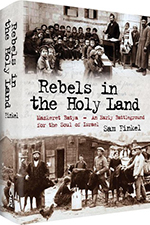
Leora Wenger of Sketching Out presents a book review of Rebels in the Holy Land: Mazkeret Batya – An Early Battleground for the Soul of Israel by Sam Finkel.rebels-in-the-holy-land-150px

Also on Sketching Out is a introduction to Mordecai Ben Isaac Ha-Levi & Other Tales      by the author herself, M.L. Holtzman.

That’s all, folks. Have a December to remember, keep reading and writing. Come back and visit!

Diana Bletter

Posted in Writers, Writing | Tagged , , , , , , , , , , , , , , , , , , | 5 Comments

First-Time Novelist Amy Sue Nathan: On Women’s Fiction Writing

AMY SUE NATHAN

AMY SUE NATHAN

I am happy to welcome first-time novelist, Amy Sue Nathan, author of The Glass Wives (St. Martin’s Griffin) and founder of a blog for women’s fiction writers, http://womensfictionwriters.wordpress.com/.

Diana: So you published your first novel, The Glass Wives. Yay, you! You’ve mentioned that divorce and death and moves across the country sparked your redefining family and friendship. Can you tell us more about how The Glass Wives came to be?

Amy Sue Nathan: I’ve always been a writer, but after my divorce and the death of my ex-husband, many people suggested that was memoir fodder. I disagreed! I didn’t want to relive horrible times in my life. I also believed that my family’s story was private. But, I did realize that there were things I could pinch things from real life and make up characters and scenarios and dialogue that served a story that wasn’t mine, but was more universal. In fiction, authors can make things better or worse than in real life, turn around events and make things right. In fiction authors explore the familiar as well as the foreign, and that’s what makes it so great. In The Glass Wives, Evie loves to bake. I hate to bake! That was really fun to write. In The Glass Wives, Evie teaches American History on the college level. In real life, I always thought I’d be a teacher (but ended up a journalism major, quite fortuitous, wouldn’t you say?) so that was fun to write in another way.

Diana: You have a great blog, http://womensfictionwriters.wordpress.com/. Can you share a bit about why you started the blog and some of the challenges that women writers face?

Amy Sue Nathan: Well, women’s fiction writers can be men! The blog is about fiction that explores the authors, books, and craft of women’s fiction, which by my own definition is fiction that’s about a woman’s journey. Lots of it is written by men. Sure, I interview mostly women and a lot of books that fall under that umbrella are written by women. I don’t mind the label because, let’s face it, I’m a woman, women buy more fiction than men, and I am proud to write books that appeal to women. That being said, I have a lot of male readers (who are not related to me) who have really enjoyed The Glass Wives. I started WFW in 2011 because I wanted to feature the kinds of books I liked to read—not romance novels or chick lit, not mystery or thriller. I have and do read all of those, but mostly I read stories of family and friendship and relationships that focus on women. To me, that’s what women’s fiction is. It runs the gamut in terms of tone, style and plot— but that’s what I enjoy most. I couldn’t find a place online to connect with writers like me. So I created it!

Diana: Now let’s take another step and narrow this down even more – your novel starts in a quintessential Jewish setting – during shiva, the traditional Jewish mourning period. Tell us about the Jewish angle of your writing.

Amy Sue Nathan: In The Glass Wives, the Jewish essence of the family was key to me. It was just “who they were” as they lived their lives. The customs, the food, even the way Evie always liked to feed her friends and family was very culturally Jewish to me. The fact that Evie takes in her ex-husband’s young widow who is NOT Jewish, brings up the whole issue of how we’re all more alike than different. I loved how the customs of this fictional family felt so real to me.

Diana: I wrote in my Jewish Book Council review of The Glass Wives, “Told with wit and humor, Amy Sue Nathan pulls off a story brimming with domestic details that make the characters’ dialogue sound like conversations overheard from next door.” I loved the immediacy of your writing. What are some rules you follow for your writing? Do you write an outline? Did you know the end of your novel before you got there? And what are you working on now?

Amy Sue Nathan: I am thrilled you enjoyed The Glass Wives and that it “hit home” for you. That’s the best thing an author can hear! Will you forgive me if I admit I don’t follow any rules? Okay, I have one rule. BE HONEST. And that doesn’t mean write truthful things from real life, it means bring honest emotion to the characters that bring them to life on the page. I did not have an outline for The Glass Wives, although I would write notes at the end of each writing session about what I wanted to happen next. It’s always best for me to stop before I’m done! That way, I’m excited to get right down to business next time.  I did not know the ending when I was writing. Well, sort of I did and sort of I didn’t.

During one of my massive revisions before the book sold I rearranged the novel and cut out fifty pages. The end was gone, the middle was the end and there were many new pages to write. It was as much the evolution of a novel as the writing of one!  And yes! I do know what’s next! Another novel for St. Martin’s Press coming out in 2015. It’s currently untitled, but about a divorced mom and anonymous blogger who lies about having a wonderful boyfriend, and then lands a plum job as a dating columnist, even though she hasn’t dated in years. It’s about secrets, lies, the internet, and what happens when all of it gets a little out of hand. Of course, most of the characters in this book are also Jewish, and it’s set where I grew up, in Northeast Philadelphia.  The Glass Wives is set in a fictional suburb of Chicago, which is where I live now (although I live in a real suburb, not a fictional one).

Diana: Finally, www.thebestchapter.com explores how to write your best chapter and also how to live your best chapter each day in the story of your life. What are some things you do to take care of yourself each day?

Amy Sue Nathan: It might sound cliche´ but I always make time for me. I’ve started reading every morning! By bedtime I’m too tired, so this was the perfect solution. I sit in my favorite chair, while it’s still dark outside, steamy cup of coffee by my side, and spend about thirty minutes indulging in my book of choice!

Posted in Writers, Writing | Tagged , , , , , , , , | 6 Comments

Tool For Tuesday: When Does Doing Good Go Bad?

Last week’s Tool For Tuesday was about helping others. But there’s a flip side. When does helping turn into enabling? When does saying yes too often turn into people-pleasing? And when you say yes, is it only because you’re scared to say no?

I got a note from a friend who wrote, “ I feel guilty taking care of myself…I feel guilty when I do things I need to do, or say no to what other people ask of me.”

First, let’s get over this guilt thing. Even Mother Theresa went home to pray by herself or take a nap or nibble on a snack. (Ever hear of that movie, “The Snacking Nun”? Oops! Sorry about that.)

I often feel guilty for saying no. I’m a Jewish mother. Of course, I feel guilty for not doing everything in the world for everybody else. But one of my favorite friends, who’s Catholic, told me, “Drop that guilt thing! My priest always tells me, ‘Guilt is a wasted emotion!’”

Oh, I pay attention to anyone in any faith who can teach me something. If you’ve done something wrong, you can make amends. If you haven’t done something wrong and just feel like you’ve disappointed someone, then turn off the guilt. Really. Each time you catch yourself feeling guilty, remind yourself that if you feel bad, you probably did the right thing!

Of course, it’s great, valuable, and spiritually uplifting to do good for others. But we have to draw the line. If we’re doing things for other people that they really need to learn to do for themselves, then we’ve got to stop. That includes making sure they pay their bills on time, don’t overspend, remember to take their eyeglasses to high school, finish work assignments, etc. If we keep jumping in to rescue others (under the guise of, “Oh, I am just so nice and good!”) then we perpetuate their cycle of helplessness. They’ll never figure it out. And we never figure it out, either. Maybe under the guise of being nice, we’re really being manipulative. Maybe we’re in need of being needed. Maybe we’re using that other person’s crises to avoid looking at our own stuff. Maybe we don’t want to sit with the discomfort that comes when we watch someone else struggle and possibly fail. (Hint: Don’t watch!)

We can be good but not too good.

If we think that being good to ourselves means buying another caramel frappe, another pair of shoes, another necklace that we don’t really need, then we’re mistaken. Being good to ourselves means taking positive, healthy, even spontaneous (jumping into a pile of leaves) steps to take care of ourselves.

We can be good to ourselves even if it means others will think we’re bad, selfish, mean, rotten. Sometimes the best way to know if we’re doing good for ourselves is if we feel bad. We’re stepping into unfamiliar territory and trying something new. And remember that we can’t be our authentic selves if we keep worrying what other people think about us.

Living our best chapter means stepping out of our comfort zone and trying new behavior. What we once thought of as good might not be all that. We need to check our motives. We need to ask ourselves if we’re over-doing this being good thing.

Tool for Tuesday: Sometimes it’s better to be bad than to be good.

Posted in Self-care, Tool For Tuesday, Transformation | Tagged , , | 7 Comments

Writer Dara Horn: On Writing, Kids, and an “Unintentional Medieval Facebook”

DARA HORN

DARA HORN

I’m honored to host writer Dara Horn, author of A Guide For the Perplexed (WW Norton). Writing in The New York Times, Jami Attenberg called it an “intense, multi-layered story.”

Diana: Real-life people—the 12th century Jewish philosopher and physician Moses Maimonides and the 19th-century Cambridge professor Solomon Schechter play major roles in your latest novel, A Guide For the PerplexedCan you tell us how those stories came to join forces with your fictional characters?

Dara Horn: When I wrote this book, I had recently finished a book tour for my previous novel, All Other Nights—a book about Jewish spies during the American Civil War. At several events for that book, I noticed that readers were showing up in costume, in Union or Confederate uniform, with muskets and pigs-hair toothbrushes, and waxing poetic about their most recent battlefield reenactment. I decided it was time for me to take a break from historical fiction, and so I set out to write a totally contemporary novel, where the characters were all my own. And so I wrote a novel so contemporary that it is actually set in the very near future, about two sisters who hate each other and featuring a software app one of them invented that records everything its users do—and which, for the record, doesn’t quite exist yet in the real world beyond my book.

But when I saw that so much of my hyper-contemporary plot was about the distinction between history and memory—between the actual evidence of the past and the story we choose to create about what that past means to us—I knew I needed to test it against something more significant than one (fictional) person’s childhood. I was aware of the Cairo Genizah [ a place for storing books or ritual  objects which have become unusable]since I was a teenager, and I decided to investigate this older form of what we now call “data storage”—in this case, a room full of nearly 200,000 discarded medieval documents that, in the aggregate, provide enough evidence of daily life that it constitutes a kind of unintentional medieval Facebook.

I knew that Rabbi Solomon Schechter had discovered the Genizah. But when I went to find out the actual story of its discovery (a process that would have been a lot easier one year later, when two popular books were published telling this very story!), I found a wealth of details that essentially handed me these historic figures as characters. My contemporary novel was focused on the relationship between two sisters, a rewriting of the Joseph story that casts the free-will-versus-fate dilemma as one intertwined with the nature-nurture debate. (How much of who we become is up to us?) Imagine how wonderfully convenient it was for me to discover that the people who alerted Schechter to the trail of medieval papers leaking out of Cairo were in fact a set of identical twins—two Scottish Presbyterian middle-aged widows who were dazzlingly brilliant and had themselves discovered an important early version of the Gospels (which was just like the Gospels we know today, except without the virgin birth and without the resurrection… I couldn’t make this up).

When I realized I was going to be writing from Schechter’s point of view, I researched his life and quickly discovered another unbelievable gift to my novel: Schechter himself was an identical twin. Even better, he and his twin were like a foil for the Scottish sisters. The Scottish twins had been bound by their father’s will to live together for the rest of their lives or else forfeit his fortune. But Schechter and his twin brother had both abandoned their Hasidic town in Romania for radically different lives: Schechter had gone west to become an academic, while his brother moved to what was then Ottoman Palestine and founded what became the Israeli city of Zichron Yaakov.

When I started looking into the life of Maimonides [a 12th century rabbi and sage and author, too, of The Guide to the Perplexed], I found yet another gift for my book: Maimonides himself had a brother with whom he was very close. In one of the letters from the Cairo Genizah, he describes how his brother, a traveling businessman, had drowned on a business trip to India. That letter describes his mourning for his brother with beautiful biblical language (and his brother’s last letter to him, from the port in what’s now Somalia as he waited for the ship on which he would drown, was also found in the Genizah and is also beautiful); he says he has been in mourning for eight years. Yet when he mentions his brother’s drowning, he also adds that his brother drowned “with a great deal of my money.” I found this an odd thing to include in a letter that expresses such powerful grief. Maimonides, and to a lesser extent Schechter, are figures who are usually thought of today more as concepts or even as “brands” than as people. But for me, these details about their brothers brought out something conflicted or regretful in each of them that made them very human and very real.

Diana: Can you tell us a bit about your writing style? What are some rules you follow for your writing? Do you write an outline? Did you know the end of your novel before you got there? And what are you working on now?

Dara Horn: People often ask questions like this about my creative process, which I think is funny because the question implies that I have a creative process. I never took a creative writing class, so it never occurred to me to make any rules for myself. The truth is that I don’t plan my novels at all. My novels typically start with a hundred pages that I throw away. But again, what does it mean to be typical? I’ve only written four novels so far, and the most recently two started that way. It’s a bit like raising children, in that having done it before doesn’t mean you’ll know how to do it again, because the challenges are different each time around. If I could just publish the same book and raise the same child again and again, I’d have it made. As it is, though, I don’t have any plan, and no, I don’t know how it’s going to end. With this novel at some point I decided I wanted to loosely follow the contours of the biblical Joseph story, so to me that meant the contemporary sisters had to confront each other in some way at the end. But that’s not saying much. (And their confrontation ends quite differently from the biblical version.) Other than that, I’m basically writing the same way you are reading: to find out what happens next.

As for what I’m working on now, remember those hundred pages that I throw away? I’ll let you know when I make it past those.

Diana: Finally, www.thebestchapter.com explores how to write your best chapter and also how to live your best chapter each day in the story of your life.  You have—at last count, four kids. I know the feeling with four kids and two step-kids. Were you serious about creating an app that actually dilates time???? If that is not yet available, what are some things you manage to do to take care of yourself each day?

Dara Horn: The app that dilates time is still in development. Until then, my main sources of inspiration are daycare and public school, and the rare instances when both are in session and no one is home sick. I am very inspired as a writer by having four or even sometimes five hours a day when my house is empty and no one is smearing anything on my clothing. (And even better, they can smear as much fingerpaint as they want at school, with the clean-up done by someone who isn’t me.) My day is very starkly divided into work and children, with a very clear demarcation line at 2:30pm when I have to start picking everyone up. I have gotten used to this divide down the middle of my life, which I think just about everyone experiences in one way or another. I see this as two chapters rather than one. I don’t know which one is my best chapter yet, but if it turned out to be the writing one, I think I’d count myself a failure.

What revives me each day are my evenings with my husband. Our children are still too young for us to have a family dinner that any of us would enjoy, so they eat at 5pm (while I read stories aloud to them, or while my husband conducts tableside science experiments with them), and then the two of us get to have an adult evening after everyone is asleep by 8pm. His career and interests are totally different from mine—he’s an attorney who focuses on technology and law, and he builds drones in our basement and flies them for fun—but we share a sense of humor and a creative intensity that reminds me each day what all of it is for.

Thank you so much, Dara!

Posted in Writers, Writing | Tagged , , , , , , , , , | 4 Comments

Tool For Tuesday: Surprising News. Want More? Give More Away.

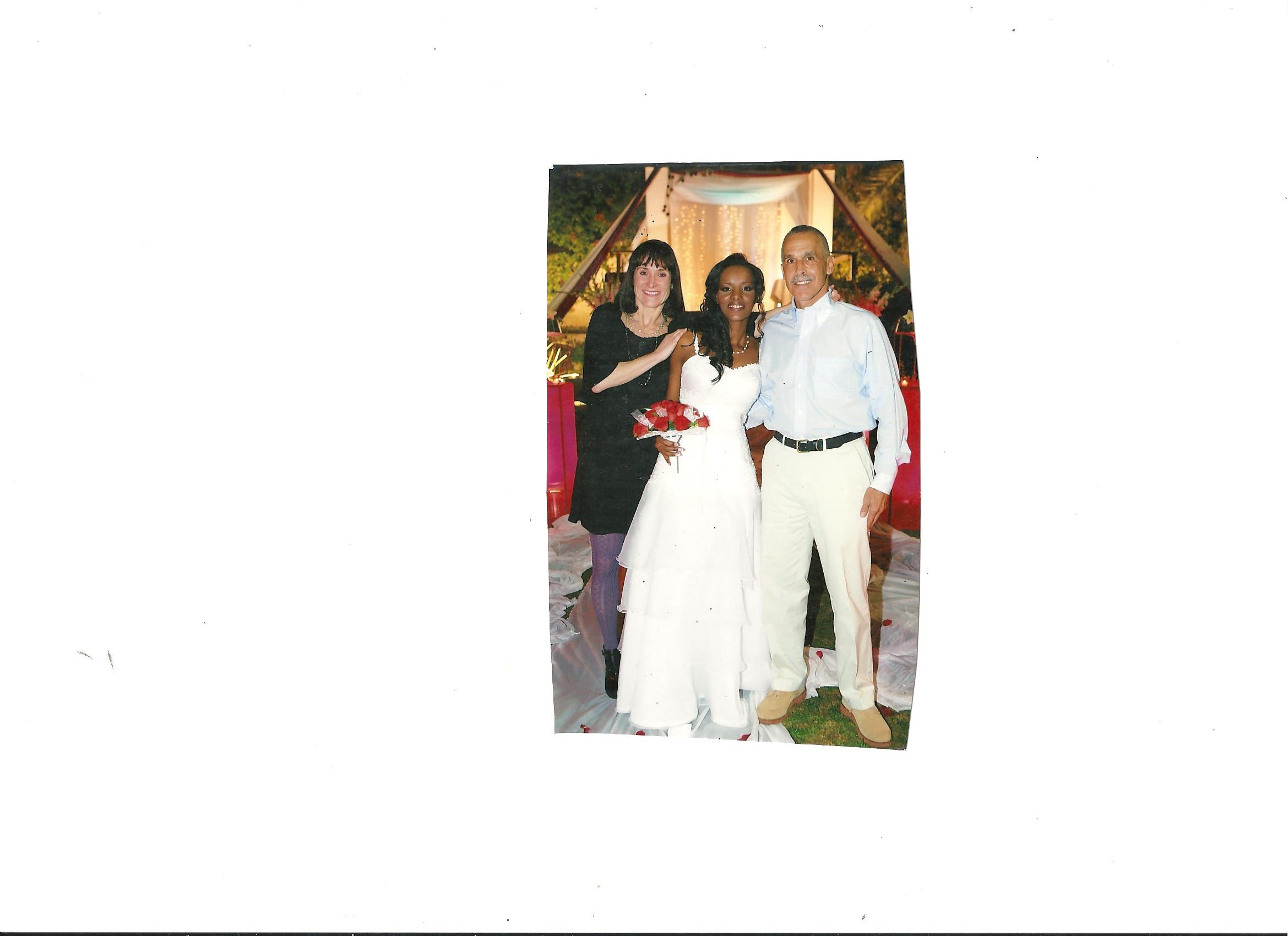
Jonny, Degetu and I at her wedding to Shai Nachman, January 2010

Jonny, Degetu and I at her wedding to Shai Nachman, January 2010

Check out this photo. My husband, Jonny, and I were at the wedding of our unofficially adopted daughter, Degetu Mamo, three years ago. And last month, she gave birth to her second child, Omer, an entirely cute boy. Her first child is an entirely cute girl named Inbar. I would have included a photo of the kids but I couldn’t get the thingamajig to work for me.

So what does this have to do with the tool for Tuesday? Everything. Because my husband, Jonny, and I met Degetu about 13 years ago and took her into our lives. She was born in Ethiopia and moved to Israel when she was about 12. She grew up in a village in Gondar Province, Ethiopia, and knew when it was time to go to school by the way the shadows fell off the trees. She now works as a computer systems analyst at Bank HaPoalim.

It’s one of my favorite paradoxes: the more you give away, the more you reap. The more you step out of yourself and your own feelings of emptiness, the more you fill your own well.

Tool for Tuesday: Think of something you can do for someone or something else. The more you give away, the more you get back in return.

Posted in Self-care, Tool For Tuesday | Tagged , , , , | 5 Comments

One Reason I’m Lighting Hanukkah Candles Again This Year

The following article appeared in The Philadelphia Inquirer in 2011 and I’m reprinting it here:

This Hanukkah, I’m lighting the candles in memory of Prisoner A-1175. Her name was Marta Paran and that was the number tattooed into her arm at Auschwitz.

There are approximately 125,000 Holocaust survivors left in America and it is estimated that 35 die each day. When Marta recently died at age 88, I realized that time is running out. I wanted to tell her story to as many people as I could. Some people deny the Holocaust even happened. Others say they’ve seen enough movies and books to know what happened. But when the story is told by someone you know, it changes your sense of history. So here’s one more.

When the Nazis invaded the small town in Hungary where she was born and raised, Marta was 21. It was Passover, 1944. All the Jews in her town were loaded in cattle cars headed for Auschwitz. There were fires all around and chimneys and it was very bright. She felt like she had arrived in hell.

Her 17-year-old brother passed the first selektia. She saw him a few days afterwards but she never saw him again. Her father was 60 and her mother was 54. They were immediately gassed.

Marta and the other women who made it past the first selektia were undressed, their heads shaved. Bald and naked, nobody knew who anyone else was. The women took showers and the guards threw them dresses. The dress Marta received was from another prisoner, a black dress with gray flowers. It looked like a grandmother’s dress.

Then she stood in line and a woman used a pen and tattooed a number on her arm, A-1175.

“That’s terrible,” I said, looking down at the crude, bluish-black number.

She shook her head. “Compared to everything else, it was nothing,” she said. “It meant that they thought I was strong enough to work. And I was still alive.”

She lived in the C Lager. It was one long street with 30 barracks. One thousand women to a barrack, 12 women to a wooden bed. One time they were locked in the barrack and they heard trucks coming to another barrack where there was a group of women from Czechoslovakia. She heard the Nazis shouting “shnell, shnell,” and then crying. The next day, Marta had to clean out their barracks. She saw drawings of Snow White and the Seven Dwarfs on the walls. She never spoke about those drawings to anyone and thought that maybe she had dreamed it. But years later, she read a book by a woman who had been there and she said that she had drawn those pictures for the kids. Marta never cried for her parents or brother the whole time she was there. But she cried for the Czech women and children because she knew where they were going.

After the War, Marta joined a group of young people who’d also survived and headed for what would soon become Israel. One of the members of her group was her future husband. They settled in a farming village in northern Israel where Marta worked in the fields growing beets, tomatoes, cucumbers. She raised three sons and eventually had 10 grandchildren and six great-grandchildren. She used to look around at all her family photographs in her living room and tell us, “This is my revenge against Hitler.”

When my youngest daughter and I went to pay a condolence call at Marta’s oldest son’s home, he told us that he knew very little about his mother’s life. She had made a pact with her husband never to speak about the Holocaust. She longed to forget but I understand now that it is up to me to remember. I’m celebrating the festival of lights this year by remembering someone who survived the darkness and managed to keep alive a very small flame.

Posted in Love, miracles | Tagged , , , , , , , | 9 Comments

Tool For Tuesday: “I Can’t Help It,” You Say. Oh, But You Can. One Self-Help Tip That Works. Guaranteed.

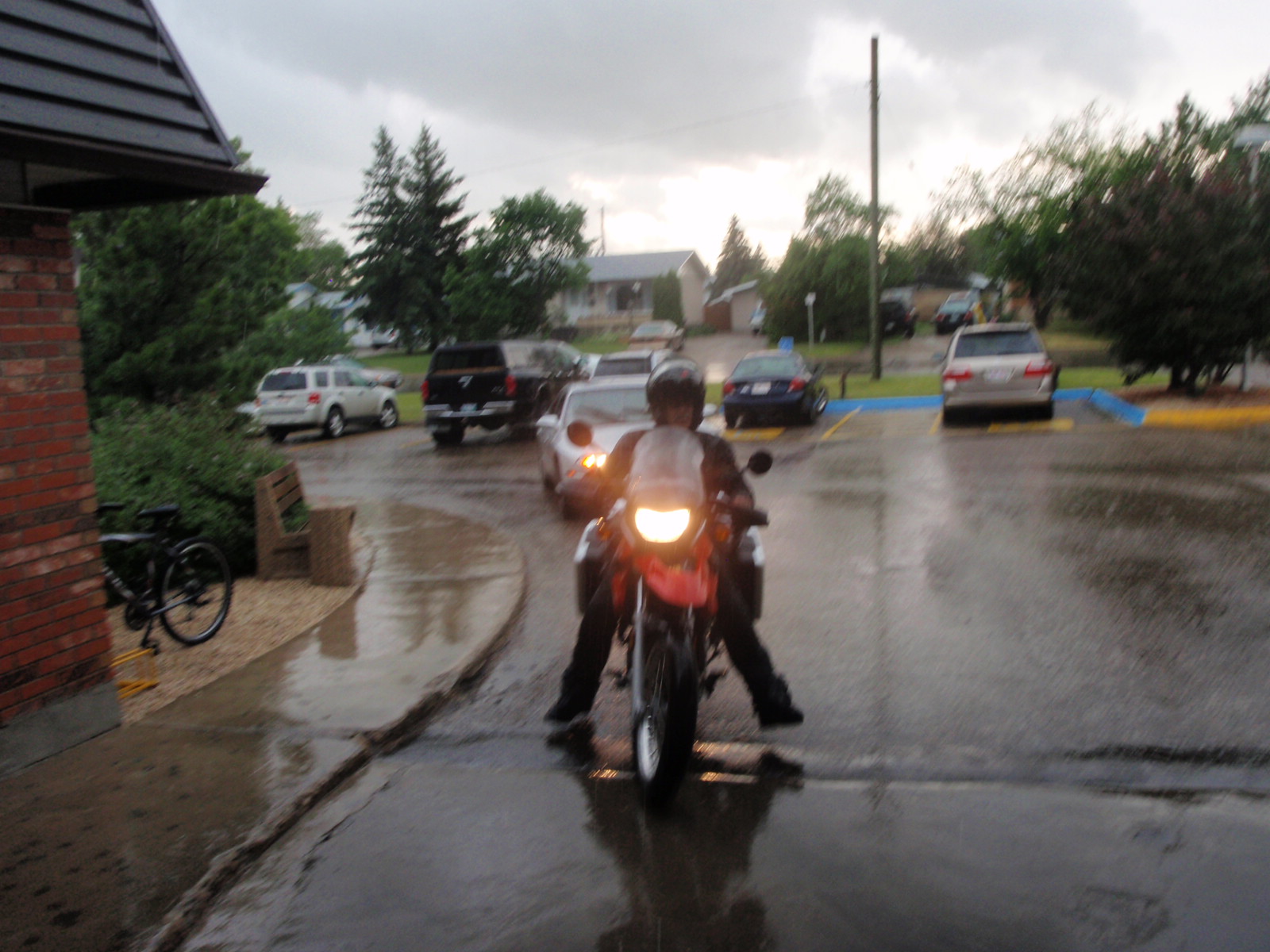
Arriving in Brandon, Manitoba. in the pouring rain

Arriving in Brandon, Manitoba. in the pouring rain

Sometimes our responsibilities overwhelm us. Sometimes we just don’t think we can’t make it through another second of our life as it is. Sometimes we don’t think we can ride or move or walk another step, another rotation of the wheel, in the pouring rain and the wind.

But the hidden force of the universe will help us do whatever task lies before us. All we have to do is close our eyes and sincerely ask for help and then plug into that source of power and let it take us where we’re supposed to go, and help us do what we have to do.

Sometimes we hear someone tell us something that is spot-on. For example, my husband told me, “You never let me finish my sentence!” Ouch. At first I said, “I can’t help it.” Defense, defense, defense. I can help it. How? By being aware. By taking a breath and letting that breath make a pause between my first reaction (jumping in) and a thoughtful, quiet response.

We can help it. We can. We can change our behavior and our thoughts by becoming aware of ourselves. It’s tough to bust through denial when it’s sooo much easier to stay in the fog. But we never grow. Y’all don’t want to stagnate now, do ya?

Little kids can’t help it. But adults can. No excuses. What are you doing that’s causing you pain? Can you stretch yourself a little and step out of your comfort zone and do something that’s a bit unfamiliar?

Me: I can wait to hear what my husband has to say before I jump in and react. That’s my commitment for today. What’s yours? What is one thing you can do differently today?

Tool for Tuesday: When you say, “I can’t help it,” remind yourself: Yes, you can.

Posted in Self-Talk, Tool For Tuesday, Your Best Chapter | Tagged , , , , | 5 Comments

Tips For Shy Writers: Once You Publish Your Book, You Have to Learn Marketing

Be creative when you market yourself!

Be creative when you market yourself!

So, you wrote a book. You got it published—whether you self-published it or got someone else to publish it for you, you still need to market yourself and stay in touch with your readers. Even a very successful writer like Jennifer Weiner has a blog, a facebook page and a website…And she’s always connecting with fans and future readers. So what do you do? Whether you publish your book or not, you still need to keep your online presence current. Here are some tips:

Guest-blog. Read other people’s blogs and leave intelligent, friendly, helpful comments. Get to know the blogger and then maybe you can be a guest blogger. With that, you can provide a link to your blog. I did this for Laura Vanderkam, who has great information on time management.

Write your own blog. This might be a traditional website but you need to add fresh content. People are curious about you. What can you write about? Do you have good tips for baking zero-calorie cookies that taste like they have butter and chocolate chips? Do you know how to grow shitake mushrooms (my son, Ari, has managed to grow just one!) How to build a zipline from your window to your neighbor’s pool? How to write a novel synopsis? Find something you do—or like to do—and want to share. Some people add to their blog once a week; others aim higher. Decide what works for you. Check out Catherine Ryan Howard’s blog, Why Blog? There are more reasons there.

Write. Write a book review about someone else’s book, for example. I I wrote a review for Amy Sue Nathan’s fabulous book, The Glass Wives in the Jewish Book Council Newsletter here. My interview with Amy will be coming soon! I didn’t get paid for it but part of marketing your book—whether you published it yourself or not—is putting your name out there so people can find you.

Ask your friends if their book club will read your book. Offer a gift. I made little matchbooks as mini-books of The Mom Who Took Off On Her Motorcycle.

Twitter. I don’t know why but you gotta do it. I have connected to readers and other writers through twitter. You can comment on someone else’s comment and jump into the conversation.

Finally, utilize your amazon author page. You can get a lot of information on this page, including your youtube videos (you have one of these, don’t you?)

It doesn’t matter who publishes your book – it’s still up to you to promote it. Have any suggestions? Feel free to share them!

Posted in Writers, Writing, Your Best Chapter | Tagged , , , , , , , | 9 Comments

Tool For Tuesday: In A Relationship, Do I Want to Be Right Or Do I Want To Be Happy?


"Do I want to be right or do I want to be happy?" asks The Mom Who Took Off On Her Bicycle

“Do I want to be right or do I want to be happy?” asks The Mom Who Took Off On Her Bicycle

“Oh I am not going to apologize to him,” my friend Joelle (I wrote about her here) said. “He was wrong. He acted rude. He insulted me.”

And yet—it’s three weeks later and almost every day Joelle tells me the same story. According to her version of events, he was wrong. And Joelle refuses to be the one to make the first move.

“If I go talk to him, then it’s like I’m saying he’s right,” she told me. “He should be the one to apologize to me.”

“Do you want to be right—or do you want to be happy?”

Really, does it make a difference who is the first to try to make amends? Our pride often gets in the way. And our pride can slip into self-righteousness.

It is hard to be the one to reach out first. Especially if we know we’ve been seriously wronged. But when we hold onto blaming others—then they’re living rent-free in our heads. We can find another way to fill ourselves up.

What’s more important to you: being right or being happy?

Tool For Tuesday: Maybe it’s time to reach out to someone we’ve been putting down.

Posted in Acceptance, Anger, Tool For Tuesday | Tagged , , , , | 6 Comments

Writer Molly Antopol: “Making Sense of The Scariest Parts of Life Through Writing”

Molly Antopol, Author, The UnAmericans

Molly Antopol, Author, The UnAmericans

I’m honored to host writer and writing teacher Molly Antopol, whose wonderful collection of short stories, The UnAmericans, will be published in February 2014 by W.W. Norton. You might not have heard of her. Yet. But you will.

Diana: Welcome, Molly! Your stories take us on a whirlwind ride around the world, from California to Kiev to Israel. And not only through space — also through time. “Duck and Cover” is set in the age of Eisenhower; “My Grandmother Tells Me This Story” is set, sort of, in World War Two. Can you tell us a bit about what got you writing? 

Molly Antopol: Many of the stories in this book were inspired by my family history, notably their involvement in the Communist Party. I come from a big family of storytellers, and I grew up surrounded by tales of surveillance, tapped lines and dinnertime visits from the FBI. Those things—combined with my very nerdy love of research—informed my McCarthy-era stories.

In terms of the Israel stories, I’ve spent my entire adult life going back and forth between there and the U.S. I lived there for years—I used to work for a peace group, and at a youth village aiding Russian and Ethiopian immigrants. And for the past seven years, since being on Stanford’s academic schedule, I’ve spent my summers there.

Eastern Europe is a part of the world that’s always fascinated me. My family’s originally from there, many of my favorite books were written in (and about) communist-era Europe, and in recent years I’ve been lucky enough to have received writing and research grants to a number of countries in the region. It’s interesting—though my family loves to tell stories, the one place I never got to hear about was Antopol, the Belarusian village where my relatives came from, which was virtually destroyed during World War II. A little more that a decade ago I was living in Israel and wound up at a holiday party in Haifa, where I met an elderly woman from Antopol who had known my family. It was one of the most extraordinary moments of my life. She led me to an oral history book of the village, written in Hebrew, Yiddish and English, that her son had put together. The moment I finished reading it (I remember just where I was, at the kitchen table in my apartment in Tel Aviv), I began writing The UnAmericans.

Diana: I love the way you’ve entered the hearts and minds of characters in these far-flung places. You did that in “Minor Heroics” so well – I really felt as though I was reading an Israeli soldier’s secret journal entry. Edna O’Brien wrote, “Women are better at emotions and the havoc those emotions wreak.” Do you think this applies?

Molly Antopol: Thanks! I’m so glad you thought I achieved that in “Minor Heroics.” I’m a big fan of Edna O’Brien’s writing, but I’m not sure I agree 100% with that quote. Some of the writers I admire most for their emotional generosity and psychological precision are men—including James Baldwin, Sergei Dovlatov, David Grossman and Isaac Babel. That said, there is a certain special kinship I feel with so many female writers. At this point in my life, I’ve only experienced what it’s like to live in the world as someone’s daughter (rather than someone’s mother), and many of the writers I’ve felt closest to—Grace Paley, Alice Munro, Natalia Ginzburg, Edith Pearlman—write so intimately and humanely about motherhood. In a sense, I’ve turned to their stories in the way I might turn to a wise and generous relative for comfort and advice.

Diana: The sense of Jewishness pervades your stories, even if the stories are not specifically about Jewish themes. Can you tell us about that?

Molly: I grew up in a secular—but very culturally Jewish—family. There have been times in my life when I’ve faced something painful and have deeply wished I were religious, because maybe then I’d be able to make sense of the loss, and would have a safety net of people to fall back on. But (blame my communist family!) I just can’t get myself to believe.

When I was very young, it was just my mother and me. Maybe because of that, I’ve always had a lot of very close individual friendships but felt lost and crowded whenever I was part of a big, organized group—it’s as if one side of me craves community and the other bucks against it. This chasm grew even wider when I let writing become more central to my life. Of course I want to be there for my friends and family during their worst times and to celebrate with them during the best. But the truth is that when something hard is happening with me, as much comfort as I get from them, I find equal solace being alone in a room, finding ways to make sense of—and sometimes even control—the scariest parts of life through writing.

Diana: What is the novel you’re working on now?

Molly Antopol: It’s called The After Party. It’s set in Israel, Eastern Europe and New York right after the fall of communism. But I’m superstitious about discussing a book-in-progress—I shouldn’t say anything else!

Diana: Finally, www.thebestchapter.com explores how to write your best chapter and also how to live your best chapter each day in the story of your life.  What are some things you manage to do to take care of yourself each day? 

Molly: I go running—I find that I’m able to untangle so many problems in my stories on long runs. And I take my dog on lots of walks, which helps me in the same way. Though I probably look insane, wandering around my neighborhood in my pajamas in the middle of the day, talking to myself.

Thank you so much, Molly! For more information, visit Molly Antopol’s site here.

Posted in Writers, Writing | Tagged , , , , , , , , , | 27 Comments