The Mom Who Took Off On Her Motorcycle About To Take Off!

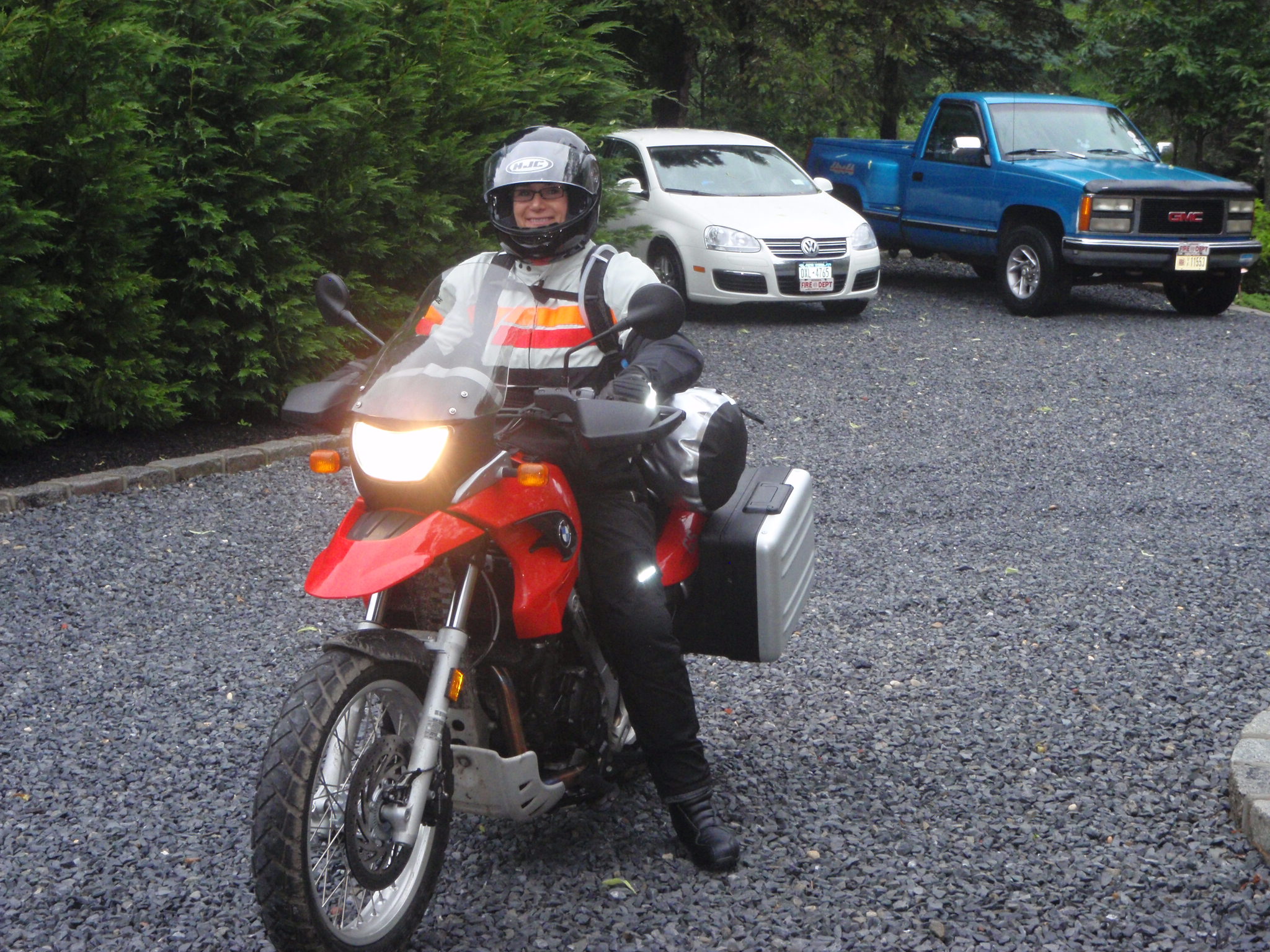
You can't hear my heart pounding furiously nor can you see my knees shaking right before we took off for Alaska.

You can’t hear my heart pounding furiously nor can you see my knees shaking right before we took off for Alaska.

Here’s what I learned about self-publishing and how it connects to living our best chapter:

I could have sat and stewed about how my agent at Trident Media Group couldn’t sell The Mom Who Took Off On Her Motorcycle. I remember reading the rejection letters from editors at traditional publishing houses. One editor wrote, “We can’t take on this project but I remember after my siblings and I left home how my mother went through a similar thing…”

Another editor wrote, “Why would Diana do something so dangerous?”

They just didn’t get it.

I could have spent time wishing I could change their minds, or wishing the publishing world were different.

But instead, I started action.

My agent was unable to sell the book. Wah! Bad things do happen to good people. Sometimes no things happen to good people. And sometimes writers have to enter into self-publishing.

At first, I thought I’d go with a small publishing company and have them handle my book. They offered to upload it onto amazon.com, to make a cover, to handle the sales and help me with my own marketing. But Bill Quain then talked some sense into me.

He said, “Publishing companies – traditional, print on demand, and self-publishing companies alike – make outrageous marketing claims about their relationship with Amazon…[but] Nobody has a relationship with Amazon that will help you sell books.  Nobody.”

Bill pointed out the power of word of mouth…and good marketing…and those are things that authors have to do themselves.

So here I am.

My goal is still to have a book bought by a traditional publishing house—because it’s validating and very satisfying. I know, because I felt it when Jewish Publication Society took on my first book, The Invisible Thread: A Portrait of Jewish American Women–created with Lori Grinker with her stunning photographs–is now, unfortunately, out of print. (You can still find a few stray copies here.)

Meanwhile, though, I’ve learned so much. Here’s to living our best chapter. Because we don’t have to give up our dreams.

Remember: we don’t always get what we want, but we can still get almost what we want! Or something fresh and new, which opens another door.

So, you want your FREE copy of The Mom Who Took Off On Her Motorcycle in paperback? You have to ask! Enter the  contest and get someone you love a gift! (Either yourself or someone else!) Here’s all you have to do:

Like the Diana Bletter Facebook page here

Follow me (@dianabletter) on Twitter here

Tweet a link to my blog and use the hashtag #TheMomWhoTookOffOnHerMotorcycle

OR type a comment below. Even one syllable. The word “Oy” is not included, unless you’re from Finland because someone told me that “oy” means “Incorporated” in Finnish. (Is this true? Any Finnish aficionados out there?) Comment and you can win your free copy of The Mom Who Took Off On Her Motorcycle. 

THE WINNER WILL BE ANNOUNCED ON FEBRUARY 19, 2013.

Of course, you can also just save the tree and buy dozens of ebooks…that’s cool, too.

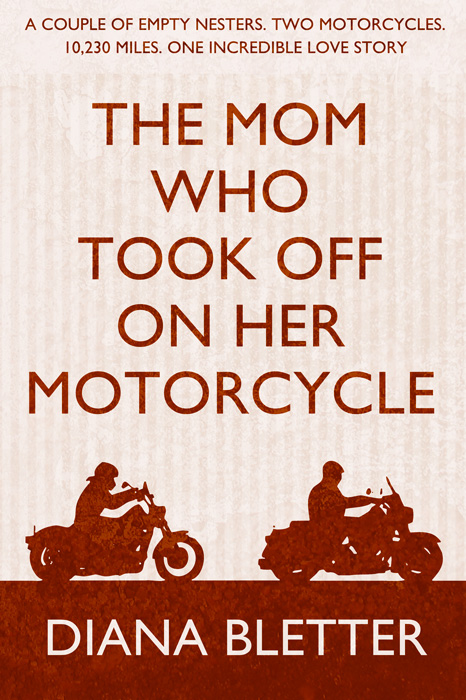
This is what the hard-cover version of the book looks like...but you will be getting a paperback! (There is no hard-cover version. If you want to lift something heavy, go to the gym!)

This is what the hard-cover version of the book looks like…but you will be getting a paperback! (There is no hard-cover version. If you want to lift something heavy, go to the gym!)

Posted in Acceptance, self-printing, Uncategorized, Writers, Writing | Tagged , , , , , , , , , | 3 Comments

Tool For Tuesday. Nobody Can Read Your Mind. Ask For Help.

I couldn't do it all alone--especially not 10,230 miles up to Alaska on my motorcycle. Here's my side-kick, Tonto. I mean Jonny.

I couldn’t do it all alone–especially not 10,230 miles up to Alaska on my motorcycle. Here’s my side-kick, Tonto. I mean Jonny.

You can’t do it all yourself. Some of the best writers in the world had the best editors. (I’m thinking of Ernest Hemingway and F. Scott Fitzgerald and Thomas Wolfe who worked with Maxwell Perkins.) Writers can’t find where they ruin their own rhythm, which character belongs in a story and which one has to go, and how to polish your writing so a dull phrase shines like a diamond.

So, we have to ask for help. We can’t do it all alone. There’s something scary about asking someone to help us—first, because we’re admitting that we’re not perfectly capable of handling everything. Then there’s also the chance the person will say no to our request.

But asking is one step closer to getting. Not asking keeps us hidden in our little rooms, not venturing forth, never changing, treading water. Once you ask, you’re moving toward your goal.

Here’s an example from my own life. I was all set to self-publish The Mom Who Took Off On Her Motorcycle before I’d even read one book about self-publishing or talked to one expert. I plunged right in thinking I could do it all myself. Then Lily told me, “Whoa, cowgirl! First, talk to someone and find out how to go about it.”

I had to reach out. I researched and found Catherine Ryan Howard who helped me come up with a marketing plan. That includes blogging, twitter and—although I’m slacking at this—pinterest and tumblr.

I had to keep an open mind. Much harder than you think. We all come to everything with preconceived notions, that’s why Malcolm Gladwell’s concept of Blink is so important because we have to first clear our minds of the junk and then refill it with solid ideas. Experts have solid ideas and then they can make “snap” judgments.

I had to reach out. At first I thought I’d self-publish my book as soon as possible on March 2012. I wanted to rush and get THE MOM out for Mother’s Day. But Lily wisely pointed out that on Mother’s Day, people give mothers gifts. But The Mom Who Took Off On Her Motorcycle is a gift that a mother will want to give to herself.

So, one year after I asked for help, the book is finally, just about out. Save the launch day, February 19th!

Nobody can read my mind and I can’t read yours. You want your FREE copy of The Mom Who Took Off On Her Motorcycle in paperback? You have to ask! Enter the  contest and get someone you love a gift! (Either yourself or someone else!) Here’s all you have to do:

Like the Diana Bletter Facebook page here

Follow me (@dianabletter) on Twitter here

Tweet a link to my blog and use the hashtag #TheMomWhoTookOffOnHerMotorcycle

OR type a comment below. Even one syllable. The word “Oy” is not included, unless you’re from Finland because someone told me that “oy” means “Incorporated” in Finnish. (Is this true? Any Finnish aficionados out there?) Comment and you can win your free copy of The Mom Who Took Off On Her Motorcycle. 

THE WINNER WILL BE ANNOUNCED ON FEBRUARY 19, 2013.

Of course, you can also just save the tree and buy dozens of ebooks…that’s cool, too.

Tool For Tuesday: Ask for Help. You Don’t Have to Do it All Alone.

Posted in Lily and her stories, Relationships, Tool For Tuesday, Writers, Writing | Tagged , , , , , , , , , , , , , , | 10 Comments

Robert Pinsky, Poet Laureate: When I Hear a Word, I Want to Turn it Inside Out.

Robert Pinsky Reading His Poem, "Creole," February 6, 2013

Robert Pinsky Reading His Poem, “Creole,” February 6, 2013

“When I was walking out of the White House and across the lawn,” said Robert Pinsky, three-time U.S. Poet Laureate, at an informal gathering of about 50 people for the U.S. Embassy’s Distinguished American Speaker program at the home of Deputy Chief of Mission of the Embassy of the United States Mr. Thomas H. Goldberger and his wife Eden Goldberger on Wednesday, February 6, in Herzliya, Israel, “after speaking to former President Bill Clinton and Hillary Clinton, I turned to my wife and said, ‘all this because of da-da-da-da-da-da.”

It was this love of sounds, the da-da-da-da-da-da, that inspired Pinsky to write poetry in the first place. The poet is in Israel this week to participate in Kisufim, The Jerusalem Conference of Jewish Writers and Poets. I went to hear Pinsky talk about poetry and writing and also to hear him read his poems out loud–most of which he read by heart–watching the way he relished the words in what he called “the corporality of poetry.” I could see the reason for Pinsky’s belief that poetry is a vocal art, meant to be read out loud.

“I don’t write a poem,” he said. “I compose a poem. I try out words. I use accidental grunts and make them meaningful. Like music. You don’t study the sheet music first, you listen. From as early as I can remember, when I hear a word, I want to turn it inside out.”

Pinsky founded The Favorite Poem Project to celebrate, document and encourage poetry’s role in Americans’ lives. As part of his project, people–ordinary people, not scholars–read famous, favorite poems in their own voice. “How great is that to hear a Jamaican man reading a Sylvia Plath poem,” he says. Pinsky says he wants to bring “the power of poetry” to people.

What inspired him growing up and wanting to be a poet? He recalled the jazz musician Dexter Gordon who said that he was inspired by Lester Young.

“’I remember the feeling that it gave me and I’d like to give other people that feeling,’” Pinsky said, quoting Gordon. Pinsky said that he “can’t remember the time I wasn’t interested in the sound of words…when I hear a word I want to turn it inside out.”

Pinsky spoke about his translation of Dante’s Inferno which has been widely praised. The challenge, Pinsky said, was translating an 11-syllable line of Italian iambic pentameter into an 11-syllable line in English because Italian uses more syllables than English does.

“I became an expert in metrical engineering,” he said with a laugh. “I was something like a trained dog: I knew how to make it move along and sound beautiful.” So “The Inferno” begins:

Nel mezzo del cammin di nostra vita
mi ritrovai per una selva oscura,
ché la diritta via era smarrita…”

Pinsky translates this:

“Midway on our life’s journey, I found myself
In dark woods, the right road lost. To tell
About those woods is hard—so tangled and rough…”

Pinsky pointed out that the words “era smarrita,” which has five syllables, translates into English bluntly as “was lost.”

“You must inevitably add Styrofoam to the Italian,” Pinsky said, “you have to pad it.” But he added that “right road lost” sounds like a Robert Johnson blues song.

So what’s the best thing for an apprentice poet to do? How does a poet learn to write? How do poems get made? How do we write our best chapter, whether poetry or verse or memoir or song?

“Make your own anthology of poems you love,” he said. “Copy them down. Memorize some if you can. Art comes out of art.”

Here’s a link to some of Pinsky’s poems, including “Samurai Song,” and “A Love of Death.” I’m sharing all this because it seemed crystal clear. How do we transform our art or our lives. Practice, practice, practice. Submerging ourselves in the craft. Studying how it’s done by the masters.

Art comes out of art. We are all apprentices.


Posted in Transformation, Writers, Writing, Your Best Chapter | Tagged , , , , , , , , , , , , , | 7 Comments

Tool for Tuesday: 10 Tools for Turning Your Lessons into Blessons

Sometimes we have to search hard to find the moonlight

Sometimes we have to search hard to find the moonlight

I first heard the term from Kristine Carlson: blessons. The difficult lessons in our life that might be blessings in deep disguise.
We don’t always understand why we’re faced with certain trials. We assume that the only end to the story is the one that we want. But life has a way of surprising us and sometimes the things we thought were the worst for us might be the very things we need to grow.
Life is a series of homework lessons that our soul needs to grow. It’s difficult to believe that when we’re in the middle of a crisis that doesn’t seem to end, but it is only through our difficulties that we reach enlightment.
There’s a quote in the Talmud that God gave Israel paradise but that is a gift that can only be acquired through pain and suffering. There are no shortcuts, sad to say. Each of us is given our lessons and it is our job to turn them into blessings. Hence, blessons.
But how do we do that? We have to be willing to take a step back from our problems to gain perspective and ask ourselves honestly:
What can I do to make this matter better? Here are nine suggestions:
1. Stop isolating and talk to a friend

2. Ask for help: not asking for help is like not asking what you think is a “dumb” question

3. Reach out and help someone else

4. Write in a journal, write a poem, a story, a letter you burn up in a deep healing ritual
exercise your soul through prayer and meditation

5. Exercise your body

6. Turn off the TV and stop watching that show which will leave you in the exact spot you were one hour before

7. Open a book that others–ones who have been through similar experiences–have written

8. Leave the kitchen, leave the bedroom, leave the laundry room, leave the house and go somewhere, a place where you feel connected to the earth, the moon, the stars.

9. Practice cognitive intervention: Every time you catch yourself picking up the old bone of resentment or bitterness or self-pity and chewing on it, force your mind to something positive. Why think about what you don’t like when you can gently nudge your mind toward something that you do? Our thoughts are sometimes just like habits that we’re not even aware of. Mental twitching. Use mental floss and get rid of those thoughts that are dragging you back down.

10. Remember that accepting a situation is not the same thing as approving a situation. You might not like it but you have to work on accepting the life that you’ve been given. And once you’ve accepted that, then you can decide what you can do about it.
Remember that you don’t have to stay in this hopeless place. Definitely, sit with loss. Grieve it. Feel the sadness as you close the chapter. That’s legitimate. But you’ll know when it’s time for you to turn today’s sorrow into the harvest of tomorrow.

Tool for Tuesday: Try turning your lessons into blessons.

What tools do you use to turn your lessons into blessings?

Posted in Acceptance, Tool For Tuesday, Transformation | Tagged , , , , | 5 Comments

The R.A.H. Way To Land a Literary Agent


Do you remember that cartoon with Charlie Brown’s Snoopy saying that he was making a quilt with all his rejection slips?
Well, I have received enough rejection slips to make a king-sized quilt. But I have also managed to find a literary agent. In fact, I have managed to find four of them. Two agents had their own agencies; one worked at a mid-size agency and one worked at a super-name brand agency. What do agents do?
Agents want to make money. They don’t sell cars, they sell manuscripts. They will only take on projects that they feel will turn into sales because of the enormous amount of time they will invest in your manuscript. So here is my RAH approach to finding and hooking a literary agent.
Research the Right Agent.
Do NOT send a children’s book query to a literary agent who doesn’t represent children’s book authors just because you think your book is so fabulous that you’ll change the agent’s mind. Do due diligence. Before you send a Dumb with a capital D query letter, make sure you send it to the right person. Don’t send out the same letter with a Dear Sir/Madam heading to 50 random agents. Spell the name right!
Appealing Letter.
Write a query letter like a back cover blurb. Would you buy this book if you read about it? Don’t compare yourself to Danielle Steele or James Michener or Victor Hugo. Fuhgeddaboutit. You want to simply show that you can write and that you have written  something that this agent (whom you have already vetted and know the kind of books he/she likes) would be interested in.
Here is the query letter I wrote to an agent at Trident Media that landed me representation for THE MOM WHO TOOK OFF ON HER MOTORCYCLE:

After raising four children, two stepchildren and an unofficially adopted Ethiopian daughter, I’m taking off on my motorcycle and riding away.
I know it’s crazy and reckless and–well, slightly dangerous–but like thousands of other baby boomers, I’m facing an empty nest and I need to do something drastic. And dramatic.
So I’m hitting the road on my BMW motorcycle alongside my husband on his BMW. We’ll ride from our house in Westhampton, New York – almost at the very tip of Long Island – across Canada, up the rugged Alaska Highway (where we’ll dodge caribou, bison and grizzly bears) and into Alaska.
William Least Heat Moon wrote that when you’re traveling, “you are what you are right there and then.” In other words, past and future slip away and you’re whittled down to your very essence. But after defining myself for so long as mother, stepmother and wife, who exactly is that who I’ll meet on the road?
My book, The Mom Who Took off on Her Motorcycle, is a story of this journey and what I discover. It’s about agreeing to meet one of my husband’s dreams on his bucket list. It’s about doing something I promised myself I’d do before it’s too late. And taking the first step into the next part of my life.
Once in Alaska, I have an assignment to write about my trek on the Matanuska Glacier for The New York Times’ Escapes Section. I will be keeping a blog along the way.
For your information, my work has appeared in The International Herald Tribune, The New York Times, The Philadelphia Inquirer, and other publications. My fiction has appeared in The North American Review and The Reading Room.
I would be delighted to send you the first two chapters of the book. In the meantime, thank you for your consideration and for taking the time to read my work. I look forward to hearing from you soon.

This is the reply I received:

Dear Diana Bletter,
Your book sounds very appealing. I’d be interested in receiving the chapters and an outline of the rest.
Best,

So what makes this a query letter that won me an agent?
I wrote in the style of my book and gave the agent a flavor of what it would be like. I knew my book would be breezy and fun yet informative and that’s what I showed. The one thing that was missing from the letter was the one thing that made traditional publishing house ultimately turn down my agent’s query letter to them. I did not yet have a social media platform, which has become critical in today’s book market. But we’ll save that discussion for another post and continue with our pursuit of a literary agent. The above query letter followed a simple formula:

POLITE INTRODUCTION, THE PITCH, WRITING INFORMATION, CLOSING AND THANK YOU. Use your manners! I then sent her the chapters, and then the book which she represented.

Here’s another letter that landed me an agent for my novel (not yet published), The Women’s Burial Circle:
Dear __:

I am a big fan of ____ [I mentioned a book that was sold by this agent] and since you represent ___[Insert author’s name], I thought you might be interested in my first novel, The Women’s Burial Circle.
The book revolves around four American women who belong to the burial society in a small village in Israel. As they wash and dress dead women for burial, each woman–in her own voice–learns not only about death, but about herself, spirituality, life and love.
For your information, I am a freelance journalist whose work appears in…[blah, blah, blah]
I live in Israel’s Western Galilee with my husband and our children and I am a member of the burial society in our village.
I’d be happy to now send you the first 50 pages of the book via email, if you’re interested.
Thank you for your kind consideration. I look forward to hearing from you soon.

Once again, INTRODUCTION, THE PITCH, WRITING INFORMATION. But this time, I’d make sure to insert my SOCIAL MEDIA PLATFORM. Then you have your closing AND THANK YOU. Especially if they read your work. You can add, “Thank you for taking the time to read my work.”

Have your book manuscript ready. Make sure your book has been read and edited and absolutely ready before you send your query.
Agents operate in real time. I had sometimes received a “Yes, please send me the first 50 pages or the first 3 chapters” and then said to myself, “Uh-oh.” Because I wasn’t really ready…In fact, I wasn’t ready at all. I had yet to really finish the book. I just wanted to already know there was someone out there, some professional, who gave a hoot about what I was writing. But that is not the purpose of a query letter. And that is not the time to find a literary agent, when you are questioning your talent and your very purpose as a writer.

You send a query letter only after you have shown the book to other writers and your ideal reader. You send it only after you’ve already edited it a few times. You send this letter when you have all the pieces in place.

We all want a cheerleader rooting for us to finish our masterpiece but agents don’t have time to wait. They want to invest as little time and effort into your book before they try to sell it. Remember, there is a dwindling number of traditional publishing houses willing to take on a new writer. Therefore, there are not many literary agents who are willing to take a chance on an unknown, even if you are brilliant.

Question: What if you don’t have any credentials? What do you say? You say why you wrote this book. Do you work in the field of criminology? Yes, that is why you wrote this book on serial killers. Do you have 18 foster children? Yes, that is why you wrote this book, “DIY: Nurture Wins Out Or, How To Raise Perfect Foster Kids.”

If you are writing a non-fiction book, have an outline ready. There are numerous sites that will show you how to do that. And there are tons of books on how to write a novel. We can talk about that another time. Meanwhile, remember:
Show, don’t tell. Show your writing style: don’t say that you know how to write like white on snow. Show ’em.
Keep your subject line simple. If you have a really snazzy title (and you should have) say: Novel Query: The Outstanding O’Rourkes. Or, Novel Query From 2011 Pultizer Prize Winner. Do not be cutesy. If you received the name from a friend of a friend’s neighbor, say: Novel Query Via Edwina Vonderhoff.

Have any questions? Comments? Like? Other suggestions in addition to R.A.H.? Want to send me your query letter for review before it goes out? Want to use my letter as a format? Sounds good, just remember to change the biography from mine to yours! I’ll be happy to have a look at what you want to send out.

Just remember to approach everything you do with a full heart. Write and live your best chapter. And write your best query letter.
Feel free to take my fiction or non-fiction query letters and use them as formats. If you want a review of your query letters, send them to me and I’ll be happy to look at them.
Researching the right agent
Appealing letter to specific agents
Have your manuscript sealed-tight and ready

Oh, one last thing. I was waiting at Trident Media Group‘s office in New York City and I heard the receptionist speaking on the phone and saying to the caller, “I’m sorry, but if Ms. Agent was interested in your book, she would have contacted you…I’m sorry, but Ms. Agent does not take unsolicted phone calls…I’m sorry, if you don’t hear back from Ms. Agent, that means she’s not interested…” Don’t be a nudge. If Ms. Agent wants you after reading your scintillating query letter, she’ll find you! Calling won’t help!

Posted in Uncategorized, Writers, Writing, Your Best Chapter | Tagged , , , , , , , , | 12 Comments

A Not-So-Gentle Reminder: Why We’re Lucky

cellwarnotebooks
Today I’m joining in with the IndiesForward Blog-A-Thon to write about Julie Forward DeMayo. She was an independent author—known as an indie—who lost her battle with cancer in 2009 at age 37.
Julie was a creative writing major at Colorado State who dreamed of someday being a published author.
Her mom decided to take Julie’s blog, which she kept during the last seven months of her life, and turn it into an incredibly touching, sometimes funny, but always inspirational book called the Cell War Notebooks.
The other day, a creative and inspiring blogger, Tracy Campbell, asked me about the difference between having a traditional publishing company publish your book and self-publishing. Well, even if do land a traditional publisher, you will still have to do a lot of the marketing yourself. These days, every publisher looks for someone who has a platform in social media. So if you’ve already started blogging and tweeting, then you’re already on the right path. All authors have to do their own marketing.
But Julie can’t do this anymore.
A few weeks ago, Julie’s mother reached out to Duolit, a team of two women, Shannon and Toni, who have great services for independent authors. (You can find them here.) They are a fabulous team who help indies get publicity. The paperback has garnered some attention in Julie’s native Wisconsin, but has not reached a national audience.
I’m joining in on the project to help fulfill another writer’s dream–and because the book’s proceeds go to benefit Julie’s nine year-old daughter, Luka Jane.
Cancer strikes all of us. There isn’t anyone who doesn’t know someone who’d died from the disease.

Angie Forward Cargill, Julie’s sister, wrote on Julie’s blog:

“Julie died on August 10, 2009. Although this was not what she wanted, she passed away peacefully at home in her garden room. It was a beautiful Monday morning in Portland and the french doors were wide open so that Julie could feel the breeze. She was holding the hand of her husband, Scott. Her mom and dad, her sister and two brothers, and her dear friend, Kathy, surrounded her, sitting just outside on the back porch underneath the prayer flags which were waving strong. Luka Jane had spent the night at a friend’s house.”

Reading Julie’s book, we are reminded: We have the choice. We write our best chapter–even if it’s our last chapter.

We can–and must–be the hero of our own lives.

julie demayo

My spiel is finished for today. Go to:

The self-publishing team here

Amazon

Facebook

Posted in Being a Hero In Your Life | Tagged , , , , , , | 5 Comments

Surprise NASA Landing in the Galilee: How’s that for Hope?

HereIt isn’t every day that you get to meet the head of NASA…And I did this past Monday. Get the article in The Huffington Post here or keep reading:

The head administrator of NASA, Charles Bolden, Jr., made a surprise landing on Jan. 28 in an unusual place, an Arab town far off the tourist track in Israel’s Western Galilee, to promote the farfetched idea of bringing the Jewish and Arab communities of Israel together — through research into outer space.

But perhaps it isn’t such a far-fetched idea for Bolden, after all. His experience as an astronaut viewing the earth from outer space gave him “a new perspective to see God’s creation and to see how beautiful it is.”

“So what are we not doing right?” he asked the 200 people packed into a sustainable green building on the edge of Sahknin, a town of 30,000 people. It is here that Asaf Brimer and Dr. Hussein Tarabeih, an Israeli Jew and an Israeli Muslim, are working toward establishing Moona, A Space for Change, set to be the very first Arab-Jewish environment, science and space research center in the world.

Bolden’s visit was part of the Israel Space Agency‘s annual Space Week conference on the 10th anniversary of the death of Israel’s first astronaut, Ilan Ramon, on Feb. 1, 2003, in the breakup of the space shuttle Columbia.

Co-founder Asaf Brimer said that outer space, a region “without border controls or boundaries,” is the perfect place for bridging the gap between Arabs and Jews.

Brimer shared that his story was a typical Israeli story. He grew up on a kibbutz and became an IDF fighter pilot. After working for many years in the Israeli aerospace industry, he decided to quit and do something to bring about change within Israel. He teamed up with Tarrabeih to create the vision of Moona.

In many ways, Moona has the potential to foster working relationships between Arab and Jews by working on common environmental and space issues. But it is an extreme uphill battle. The town of Sahknin, in fact, is where a 1976 protest against the expropriation of Arab land ended in six Israeli Arab deaths and demonstrations are held there each year in commemoration.

Brimer said that this fact didn’t persuade him. He said it took him months of working with local Arab leaders to win their trust. “It was very unnatural for them to trust me, as an IDF fighter pilot,” Brimer explained. “I really believe that the NASA visit helped them believe in me and my good intentions for this project.”

His optimism is shared by Dr. Tarabeih, the head of TAEQ, Towns Association for Environmental Quality, the first environmental initiative to arise out of the Israeli Arab sector.

The Moona co-founders aim to open a research center dedicated to the environment, science and space and outreach programs for students and adults. Merav Fleischer, lead designer of the project, said, “The name Moona resonates in three languages: in Arabic, it means wish; in Hebrew, it is part of the word ‘faith,’ and it draws on the moon in English.” A Jewish Israeli who had lived in the Western Galilee her whole life, she said that she never even stepped into the town of Sahknin until she began working on the project.

“This work has changed my outlook and my belief in the future of Israel in a fundamental way,” Fleischer said.

“Who is involved with America’s space research today?” asked Bolden during his presentation to the 100 or so Arab and Jewish students. He answered his own question. “Russia. At one time, the United States and the Soviet Union were the bitterest of enemies. But we gotta be willing to forgive people. And that’s hard work.”

Bolden carried a message of hope as he walked around the rudimentary science fair that was hobbled together in two weeks, after receiving word from the United States Embassy that Bolden and other members of the NASA administration. Rare is the science student who gets to share a robotics project with NASA staff, and the students were beaming.

“It is an honor for us that you came to visit us here,” said a Sahknin ninth grader in English.

“It is an honor for me to be here,” said Bolden in his homey South Carolina accent.

Bolden said NASA and Israel are looking for more avenues of cooperation, including satellites for the study of climate change. The visit also fit into Bolden’s vision of NASA moving beyond outer space and dabbling with earthly politics. In a 2010 interview with Al-Jazeera, Bolden enraged critics when he stated that a priority of NASA was to “to find a way to reach out to the Muslim world and … help them feel good about their historic contribution to science … and math and engineering.”

But that faux-pas was behind him during his afternoon visit, his enthusiasm contagious.

“Bolden’s visit was inspiring,” said co-founder Tarabeih.”It really was a small step for NASA but a huge step for us in the Galilee.”

During his talk, Bolden shared anecdotes from his NASA flights, of leaving the gravitational field and taking photos of other astronauts upside down, what it was like going to the bathroom (just like down on earth) and the time he and the other astronauts put Goldfish crackers in a plastic bag, watched them swimming around, and then let them out so they floated through the spacecraft until they caught them and ate them up, one by one.

“What we need now is to capitalize on the momentum of the NASA visit,” said Jennifer Russell, a green building consultant who works with Tarabeih at TAEQ. A native of Texas, whose grandfather is a Christian minister and whose sister converted to Judaism, Russell moved to Sahknin in 2009 and married a Muslim. “And saving the environment is something we can all agree on.”

But can all the good will bring in $100,000 necessary in seed money to get Moona moving along?

According to Bolden, yes. As he told the students, “You are all here today, together. You demonstrated that you can do the things that everyone says was impossible.”

Loading
Diana Bletter
Posted in Uncategorized | Tagged , , , , , , , , , , , | 3 Comments

Tool For Tuesday: Get Better or Get Bitter.

Less than two years before my friend—I’ll call her Tracy—died, she found out that her husband was cheating on her. She was furious, obviously. He moved out. A while later, we met for lunch. I told her I was amazed at how serene she seemed.

“I knew that I had two choices,” Tracy told me. “I could get better. Or I could stay bitter for the rest of my life.”

Who knew back then that the rest of her life would only be another 400 days or so? But she was right to choose getting better. Because if not, she would have wasted those last days being angry, resentful, sad, furious, full of pity and plotting useless revenge.

Tracy ealized that she had to make it whether she had a husband or not. She had to take care of herself. The last page of this chapter of her life was not what she envisioned for herself. It certainly wasn’t the happily ever after ending she wanted.

But it is what it is. Bad things happen to good people. The question is, what are you going to about it? How can you take your experience and use it for your own transformation? How can you grow from it? Tracy spent some time angry, then hurt, then betrayed, then rejected, and then she had to move toward acceptance. We all have a choice in that. That is our transformation. That makes us in charge of our own lives.

This post is written in memory of my terrific friend who reminded me this Tool For Tuesday:

Get better, or get bitter.

Posted in Self-Talk, Tool For Tuesday, Transformation | Tagged , , , , , , | 2 Comments

Self-Publishing No-No’s: You Can Tell A Book By Its Cover.

The Final Cover for The Mom Who Took Off...

The Final Cover for The Mom Who Took Off…

You can’t tell a book by its cover. Oh, yeah? I do, all the time. I don’t buy a book unless I like the cover. I loved the cover of Cheryl Strayed’s Wild—a worn hiking boot—and that was the reason I splurged on the hardcover version of her book. I just had to have it. And I was right, I loved the book.

When I was starting to mull over the idea of self-publishing The Mom Who Took Off On Her Motorcycle I was first going to do the cover myself. A DIY cover that would show my creativity, right? Wrong.

While some authors can get away with their own covera, I knew I had to hire a professional. Especially after I saw some self-published authors’ book covers. They looked so…so…unprofessional.

And it is true that you get what you pay for. I figured that I was investing in myself and my career. I had to approach self-publishing the way you’d approach any business. I wanted to make the book cover be the best it could be. I ended up hiring designforwriters via Catherine, Caffeinated, Catherine Ryan Howard, who has amazing tips for self-publishing here. She suggested designforwriters.com and I loved the bold covers that Andrew Brown made for a variety of authors.

Andrew and I spoke and I told him about my book. It is a book about my journey across Canada and up into Alaska on my motorcycle with my husband on his motorcycle. It is a  journey of self-discovery as well as a love story. He came back with this cover:

First Try

First Try

While it is cute and whimsical and…not to be picky and too geekily techno, but that is a pink Vespa with hearts and I happened to ride a BMW red motorcycle up to Alaska…I also knew I would never buy a book with a cover like that. I don’t like writing with curlicues. I don’t read books with titles that have curly letters. I like my fonts like my husband: simple and sleek. And I am my first reader. If I don’t fall totally in love with the cover of my own book, why would anyone else?

Also, the cover was remarkably similar to another cover…A few months earlier, I had asked someone to do a cover for me. I didn’t want to pay much money, and the designer had come up with this:

Try Number 2

Try Number 2

Doesn’t that woman look crazily scary? Would you have bought a book about a woman like this? She looks like she took off straight for the funny farm. I wanted a cover that would inspire you to take off on your own journey…whether it is to run a marathon or walk to raise money for cancer research or sit at home and try to write a book.

Part of the problem is that cover designers work from stock images. If you want a free image, then there are few photos to work with. This woman on a Vespa happens to be one of the few free images floating around.

Maybe I wasn’t getting my message across. Did I even have a message? Did I even have a reason to want to self-publish a book? (More on checking your motives in a future post.)

Then Andrew came up with this cover.

Try Number 3

Try Number 3

So, what was wrong with this? Well, I’m not a big fan of the colors. I wanted a real photo and not an image. From far away, it looks like a papercut. Also, seeing those words on the cover made me rethink the idea. What was I trying to say? I also realized that I have an aversion to the term “Empty Nester.” It sounds as enthralling as “Menopausal.”

Also, I realized that the motorcycle wasn’t really the message. I didn’t write Men and the Art of Motorcycle Maintenance. Oops, I mean Zen and the Art of Motorcycle Maintenance. The motorcycle was part of the journey, obviously, but it was more than that.

So we went back to the drawing board and Andrew came up with this:

Number 4

Number 4

The catch was that I had to buy the rights to use the photo. So make sure when you do hook up with a cover designer you say that you are willing to spring for the rights to a photo or you are limited to free photo or art images.

I thought it was super until I showed it to my youngest daughter, Libby, who said, “Mom, did you really reinvent yourself?”

Ouch. She was right. While I did reinvent a vision of myself during the ride (read the book to find out) I didn’t turn into a 5-star chef or change into someone radically different. In point of fact, I became more me, which is a magical, radical concept. Also, the “reinvent” word didn’t feel authentically me. It seemed to be a word that was floating around the internet zeitgeist but it wasn’t my own. Plus, it seemed to wordy.

Andrew was very patient when I told him that I need another cover…and that is what you now see at the top of this page. I like it. I would buy this book. If I saw this book, I’d wish that I’d written it. And I am happy to say that I did.

The Most Important Self-Publishing Tip: When you are self-publishing, treat yourself like the CEO of your own publishing company and treat yourself as the primary author. Make solid business decisions. Invest wisely. Do not settle for schlock. Do not give self-publishing a bad name.  This is your product. Treat it carefully.

What do you think? Does it make you want to buy the book? What are you experiences with cover designers? Did you do your own cover?

Posted in self-printing, Writers, Writing | Tagged , , , , , , , , , , | 17 Comments

7 Easy RulesTo Write Your Best Chapter. (Rule 1: Write Your Worst Chapter.)

Got an email from a friend who confessed she was wondering why she was writing. What was the point of it all? Having been there and felt these feelings time and time again, I thought I’d share seven easy rules that saved me from abandoning the writing ship. Some of these are counter-intuitive but they will help you get back into the swing of things and sparkalate your writing:

1. Write your worst chapter. Really. Write really, really badly. Write with the belief that nobody can write worser [sic] than you. If you set yourself up to write badly, you free yourself. When you set yourself up by comparing your writing to that of a Pulitzer Prize winning author, you’ll lose big time. Just write poorly. That is freedom.

2. Throw away the first sentence. I have another friend who wrote an incredible first sentence for his memoir. This sentence is genius. I won’t share it because it’s so good and everybody, and not just me, would want to steal it. But then he was stuck. He has not written another word since because no other sentence seemed as powerful. Let go of that first sentence. Start your work at the second sentence. The first sentence of Moby Dick was really, “Don’t call me Chuck. Call me Ishmael.” (Nobody knows this.) (Just kidding.)

3. Ask yourself, Would you write even if nobody ever again will read your work? Then ask yourself, Why do you keep a journal? Because it’s the same principle. You’re writing just for the joy of it. No one will read my journal and I burn them periodically in a sacrificial fire. I write in them because writing helps me think clearly. The same goes with my other writing. I’m like a salmon. I swim upstream because I have to swim upstream. I write because I write.

4. Check your motives. Are you writing for riches? Fuhgeddaboutit. Are you writing for approval? Remember you have to love and approve of yourself. The act of writing can fill you up but the outcome is out of your control. It’s the process that counts.

5. Make your move. Force yourself to move your pen (or your fingertips) across the page or across the keyboard. Do not look back. Do not correct. Do not stop for spelling mistakes. Do not stop typing. Do not stop writing. Even if you get to the point where you write down, this is so stupid, write that down and keep going.

6. Find anything to write about. If you can’t think of what to write about, go on the street and tell stories about the people passing by. The guy with the green sweatshirt who is dreaming about his pet pig who died the year before. The woman in the supermarket who slept with the wife of her husband’s business associate. The elderly man—yes, the one crossing the street—just donated all his clothes and furniture to the Salvation Army because he plans to commit suicide this very night.

7. Have a writing session. You can do this online or in person. Make a commitment with a writing buddy to write for the next 30 minutes. Make it an hour. Then write. No talking. Write some more. Then share what you wrote. Or get someone to make you write. I was once with a friend and she forced me to sit in a chair and work.

Remember, we have to live through our worst chapters to get to our best chapters. The same holds true for writers. We have to write a lot of junk to get to the gold nuggets. We have to train for hundreds of miles to run that one race.

We have to keep digging, digging, digging up to the light.

This is the first in a series of articles on writing in preparation for the launch of my book, The Mom Who Took Off On Her Motorcycle. In the next few weeks, I’ll be sharing about the journey I took to write the book and how I eventually self-published it. I’ll share about marketing, self-printing, and the actual process of writing, so stay tuned. The posts will be sprinkled betwixt my other musings.

Posted in Writers, Writing, Your Best Chapter | Tagged , , , | 4 Comments